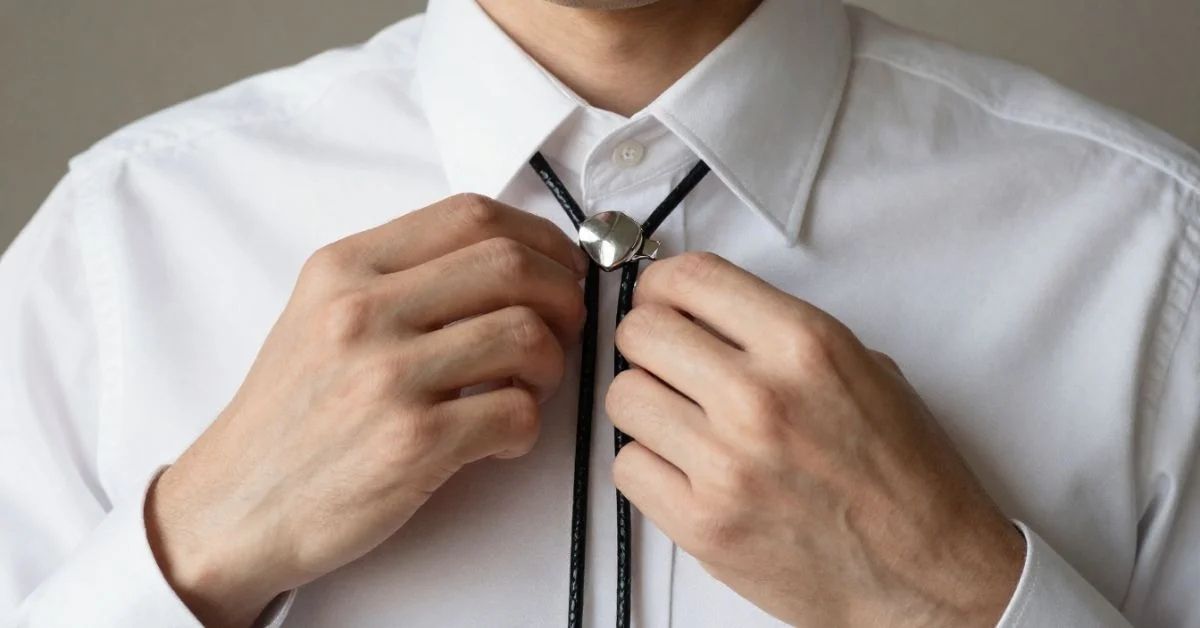
A bolo tie is a type of neckwear made with a cord, metal tips, and a decorative clasp. Wear it around the neck like a traditional tie. Bolo ties are strongly linked with Western fashion and Southwestern style. Today, they come in many designs, from simple metal pieces to bold stone-and-silver styles.
A bolo tie can make a simple outfit look more interesting. It adds personality without feeling too formal. You can wear one with a button-down shirt, denim, a blazer, or even a smart casual outfit. The right bolo tie can become the main detail of your look.
In this guide, we will explore how to wear and style a bolo tie in a modern way. We will cover different styles, outfit ideas, matching tips, and common styling mistakes. You will also learn how to choose a bolo tie that fits your personal style.
Bolo Tie Materials and Designs
Bolo ties are made from different materials, and each one gives a different look. Leather and braided cords are common choices for the neck cord. The clasp may feature silver, brass, or other metals. Some designs also use turquoise, stone, enamel, or carved details.
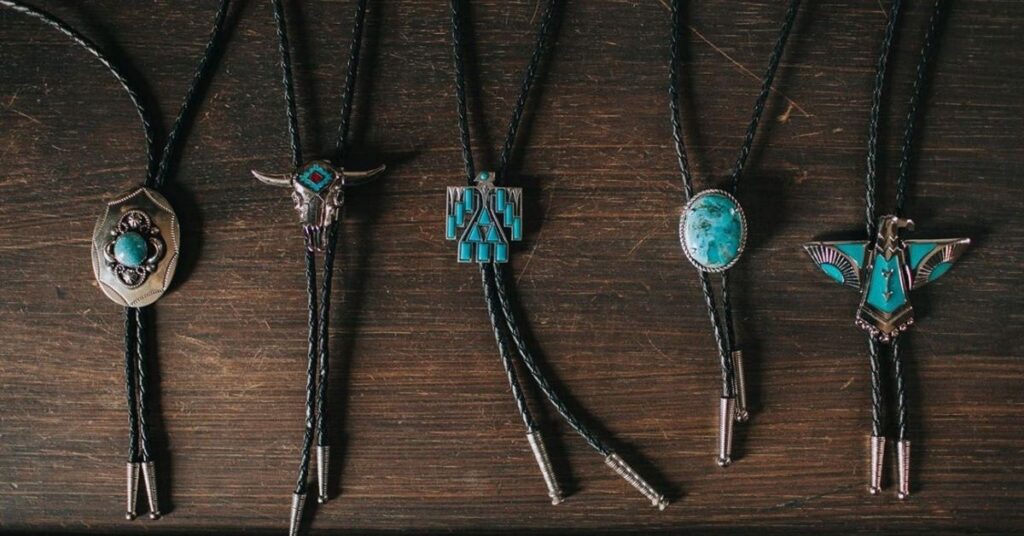
Turquoise is especially connected with Southwestern bolo tie designs. Silverwork is another important feature, often seen in detailed clasps made by Native American and Western artisans. Some pieces have stamped patterns, while others use stones as the main focal point.
Modern designs can be much simpler. A plain metal clasp with a black leather cord gives a clean look. More detailed pieces with stones, engraving, or bright colors work better when you want the accessory to stand out.
History and Western Roots
The bolo tie became closely associated with the American Southwest during the 20th century. Its simple cord-and-slide design offered a different option from the standard necktie. It became especially popular with Western shirts and other regional clothing.
Arizona and New Mexico played an important role in its Western identity. Silverwork and turquoise added a strong Southwestern character to many designs. Native American artists and silversmiths also created distinctive pieces using traditional metalwork and stone-setting skills.
Over time, the bolo tie moved beyond Western wear. It appeared in formal clothing, local cultural traditions, and modern fashion. Its Western roots are still clear, but today’s designs can look much more minimal and contemporary.
How to Choose a Bolo Tie
Start with the clasp, as it is the main visual part of the piece. Silver works well for a traditional Western look, while brass or polished metal can feel more modern. Turquoise and other stones add color and often give the design a stronger Southwestern character.
Consider the cord and its thickness too. A leather cord gives a rugged appearance, while a braided cord can look more refined. The clasp should also be in proportion to your outfit. A large, detailed piece works well with simple clothing, while a smaller clasp is easier to wear with patterned shirts.
Think about where you plan to wear it. For everyday outfits, choose a simple design that does not overpower your shirt. For weddings, Western events, or formal occasions, you can choose a more detailed clasp with quality metalwork or stonework. The best choice should match both the outfit and the setting.
Finding the Right Fit
The cord should sit comfortably around your neck without feeling tight. The clasp usually looks best when it rests around the upper chest. You can slide it higher for a sharper appearance or lower for a more relaxed look.
Pay attention to the shirt collar. A bolo tie works best when the collar has enough space for the cord and clasp to sit neatly. With a Western shirt, you can place the clasp close to the collar. With a dress shirt, keeping it slightly lower can create a cleaner shape.
The clasp should also match your body and outfit proportions. A very large clasp can look heavy on a slim shirt, while a tiny clasp may disappear on a broad or heavily layered outfit. Aim for a size that feels balanced rather than oversized.
Popular Bolo Tie Styles
Bolo tie styles range from simple metal clasps to detailed Southwestern designs. Turquoise, silverwork, engraved patterns, and stone settings are common in traditional pieces. Modern versions may use clean geometric shapes, enamel, or plain polished metal. The clasp often defines the overall character of the piece.
| Style | Key Feature | Best For | Overall Look |
| Turquoise | Natural blue or green stone | Western outfits | Southwestern |
| Silver Concho | Round decorative metal clasp | Denim and Western shirts | Classic |
| Engraved Silver | Detailed metal patterns | Special occasions | Traditional |
| Stone Inlay | Small stones set into the clasp | Statement outfits | Artistic |
| Enamel | Smooth colored surface | Modern outfits | Bold |
| Geometric | Clean lines and shapes | Smart-casual wear | Contemporary |
| Leather Slide | Simple leather clasp | Everyday outfits | Rugged |
| Minimal Metal | Plain polished clasp | Dress shirts and blazers | Refined |
| Vintage Western | Aged finish and ornate details | Retro outfits | Heritage |
| Custom Artisan | Handcrafted or personalized details | Collectors and events | Unique |
How to Wear a Bolo Tie
Start with a collared shirt that gives the cord enough room around your neck. Button the shirt near the collar, then slide the clasp upward. A higher clasp creates a sharper Western look, while a lower position feels more relaxed.
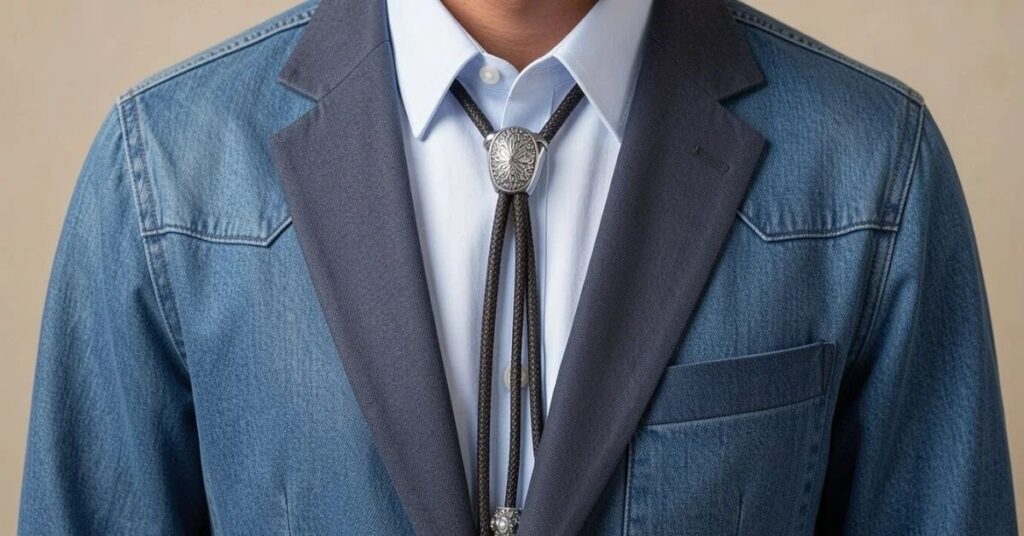
Keep the rest of the outfit fairly balanced. A bolo tie already draws attention to the chest, so avoid wearing too many bold accessories at once. It pairs naturally with denim, Western shirts, chinos, dress shirts, and simple blazers.
For a classic look, wear it with a tucked-in Western shirt and leather boots. For a modern outfit, try a slim dress shirt, tailored trousers, and a simple metal clasp. The key is to let the clasp complement the outfit instead of making every piece compete for attention.
Pairing It With Dress Shirts
A dress shirt gives a bolo tie a cleaner and more polished setting. White, light blue, and pale gray shirts work well with silver or darker clasps. Solid colors are especially useful because they let the clasp remain the main detail.
The collar also matters. A spread or point collar gives the cord enough space without making the neckline look crowded. Button the shirt neatly and place the clasp just below the collar for a sharp appearance.
For a modern outfit, wear it with tailored trousers and leather shoes. A dark blazer can add another layer without hiding the clasp. Keep the shirt pattern simple if the tie has a large stone, engraving, or detailed metalwork.
Casual Outfit Combinations
A bolo tie can work well with relaxed clothes when the rest of the outfit stays simple. Try it with a denim or chambray shirt, straight-leg jeans, and leather boots. A smaller metal clasp keeps the look casual rather than costume-like.
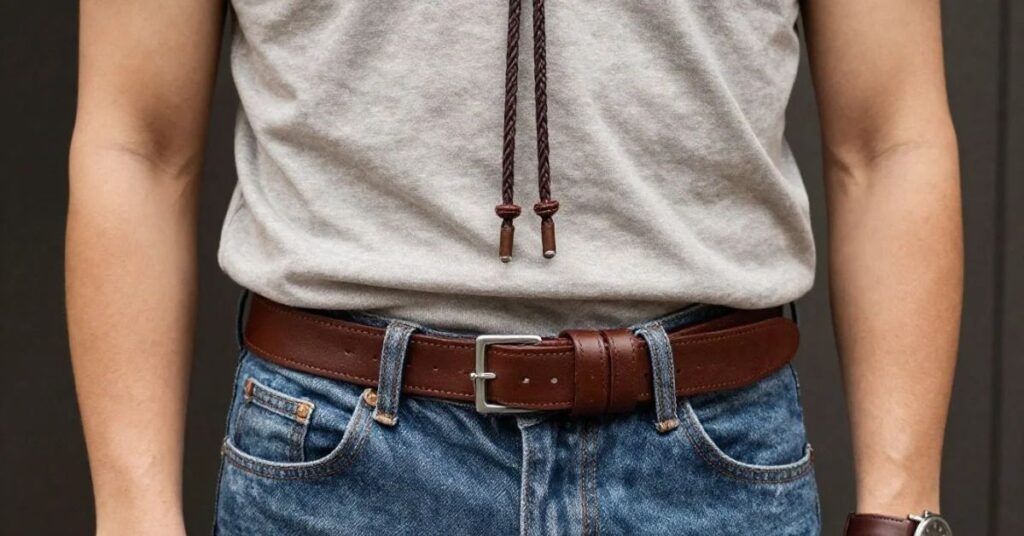
For a cleaner everyday outfit, wear it with a plain Oxford shirt and chinos. Brown leather shoes or loafers can connect the accessories without making the outfit feel too formal. A simple clasp works best with this combination.
You can also wear it with a Western shirt and dark denim for a stronger heritage look. Let the shirt and tie provide the Western details, then keep your belt and other accessories understated. This creates a balanced outfit instead of an overloaded one.
Bolo Tie Outfit Ideas for Men
For a classic Western outfit, pair a bolo tie with a denim or pearl-snap shirt, dark jeans, and leather boots. A silver clasp with turquoise can strengthen the Western character. Keep the shirt tucked in for a cleaner shape.
For a smarter look, wear a white or light-blue dress shirt with tailored trousers and a blazer. Choose a smaller metal clasp instead of a large, detailed design. This combination works well when you want Western influence without wearing a full Western outfit.
For a relaxed weekend look, try a chambray shirt with straight-leg jeans and simple leather shoes. A plain metal or leather slide keeps the outfit understated. Avoid stacking several bold accessories, so the neckwear remains the main feature.
Styling for Formal Events
For a formal event, choose a refined clasp rather than a large novelty design. Polished silver, simple gold-tone metal, or a small stone detail can look more appropriate with tailored clothing. Keep the cord neat and free from loose twists.
A crisp dress shirt gives the outfit a polished base. White, cream, light blue, and other muted shades make it easier to balance a detailed clasp. Add a well-fitted blazer or suit jacket, but make sure the jacket does not hide the clasp.
For weddings and evening events, coordinate the metal with your other accessories. If your watch or belt buckle has a silver finish, a silver clasp creates a more connected look. Keep the rest of your accessories restrained so the neckwear remains distinctive without looking out of place.
Matching Accessories
Accessories should support the bolo tie rather than compete with it. A simple leather belt, classic watch, and clean pair of boots are easy choices. Match the metal finish of the clasp with your watch or belt buckle when possible.
Western outfits can handle stronger accessories. A silver belt buckle, leather boots, or a simple cowboy hat can complement a detailed clasp. If the neckwear already has turquoise or another colored stone, avoid adding too many different colors.
For a modern outfit, keep the accessories minimal. Choose one or two supporting pieces instead of wearing everything at once. This keeps the outfit sharp and allows the bolo tie to remain the main focal point.
Common Styling Mistakes
One common mistake is choosing a clasp that is too large for the outfit. A bold clasp can overwhelm a thin shirt or busy pattern. Match the size and detail of the piece with the weight of your clothing.
Another mistake is wearing too many Western accessories at once. A large buckle, cowboy hat, statement boots, and detailed neckwear can make the outfit feel forced. Pick one or two strong Western details and keep the rest simple.
Poor positioning can also affect the overall look. Letting the clasp sit too high or too low can make the neckline look unbalanced. Adjust it around the upper chest until it sits naturally with the shirt collar.
Cleaning and Storage Tips
Clean the clasp according to its material. For most metal pieces, use a soft, dry cloth to remove dust and fingerprints. Avoid harsh cleaners, especially on turquoise, enamel, or other delicate stones.
Keep the cord dry and avoid soaking leather cords. If the clasp has stones or detailed metalwork, handle it gently while cleaning. Do not use rough cloths that can scratch polished surfaces.
Store the piece flat or hang it where the cord will not become tangled. Keep it away from moisture and direct sunlight for long periods. A soft pouch or separate box can help protect the clasp from scratches.
Conclusion
A bolo tie is more than a Western accessory. Its materials, clasp design, and styling can change the whole outfit. From turquoise and silver details to simple modern designs, there are options for different tastes and occasions.
The key is to keep the outfit balanced. Choose the right clasp, wear it at a natural position, and avoid too many bold accessories. With the right combination, a bolo tie can add character while still looking clean and modern.
FAQs
1. What is a bolo tie?
It is a neckwear style made with a cord, decorative clasp, and metal tips.
2. Can you wear a bolo tie with a suit?
Yes. Choose a refined clasp and pair it with a crisp dress shirt and well-fitted suit or blazer.
3. What shirt works best with one?
Dress shirts, Western shirts, denim shirts, and Oxford shirts all work well, depending on the occasion.
4. Should the clasp sit high or low?
For a sharper look, wear it closer to the collar. A lower position gives a more relaxed appearance.
5. How should a bolo tie be stored?
Keep it dry and store it flat or in a soft pouch to prevent scratches and cord tangling.
One Response
[…] The haircut is simple enough for everyday wear. Trim the ends regularly to prevent the longer sections from becoming too heavy. You can also push the hair back neatly when you want a more polished appearance. […]