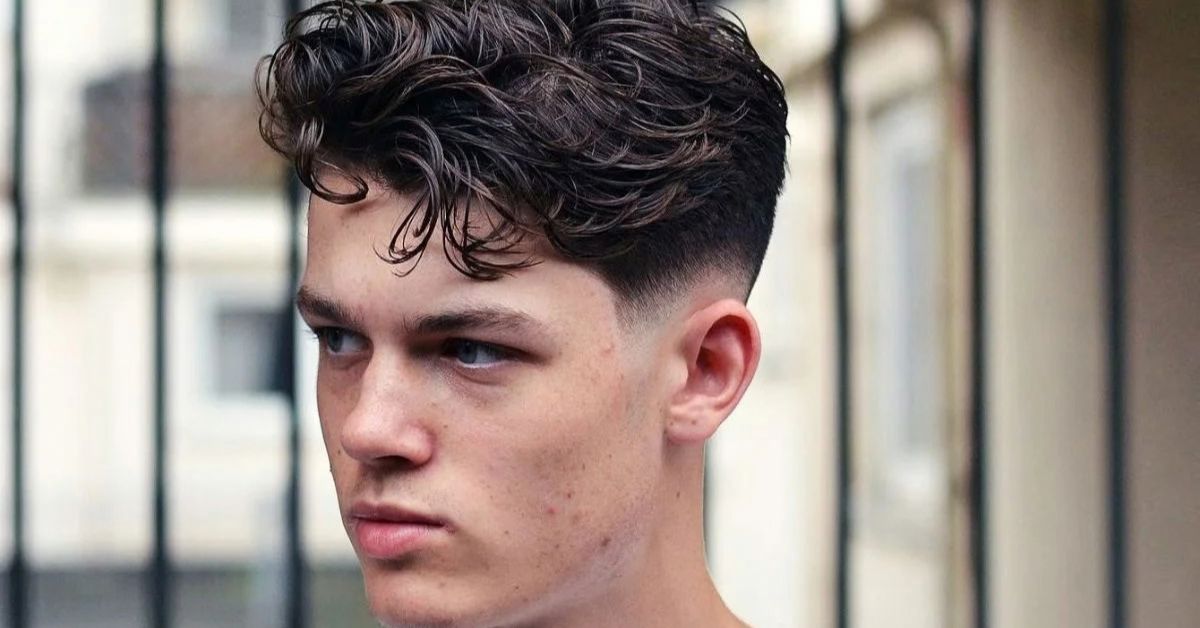
Messy hair has a way of making an ordinary haircut look more interesting. A little lift at the roots, a few loose strands, or uneven layers can give your hair a relaxed appearance without making it look neglected. Instead of fighting against your natural hair, choose a shape that works with it.
The appeal of messy hairstyles for men lies in their flexibility. Short crops can look rough and textured, while longer cuts can fall into loose waves or natural curls. Tapers and fades create a useful contrast between tidy sides and less controlled tops.
A good messy haircut should suit your hair’s thickness, texture, and growth pattern. Cutting your hair correctly can reduce styling time and help you look better with less product. From short, choppy styles to longer, flowing shapes, there are plenty of ways to create a casual look that still feels deliberate.
Popular Messy Hairstyles for Men
Messy Short Hair
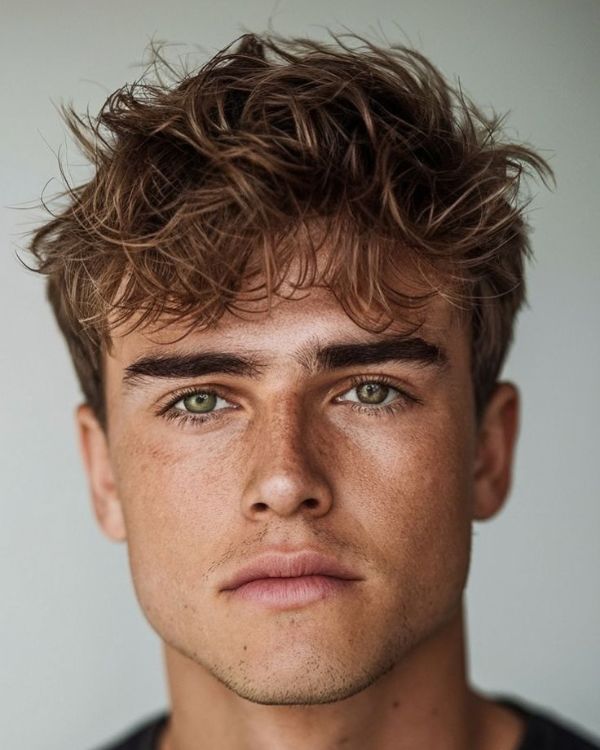
Short hair can look much more interesting when the top has small variations in length. A textured crop or choppy fringe creates little spaces between strands, giving the haircut depth without requiring extra length. Keeping the sides shorter makes the uneven texture stand out.
For everyday styling, towel-dry your hair and work a fingertip-sized amount of matte paste through the top. Push some sections forward and lift others slightly to avoid a flat, uniform finish. If your hair naturally sticks up in certain places, work with that movement rather than forcing every strand into position.
This haircut suits men who prefer a simple routine and a clean outline. Ask your barber to add texture without making the top too thin, particularly if your hair is fine. A quick trim around the ears and neckline will keep the shape fresh as the top grows.
Messy Flow
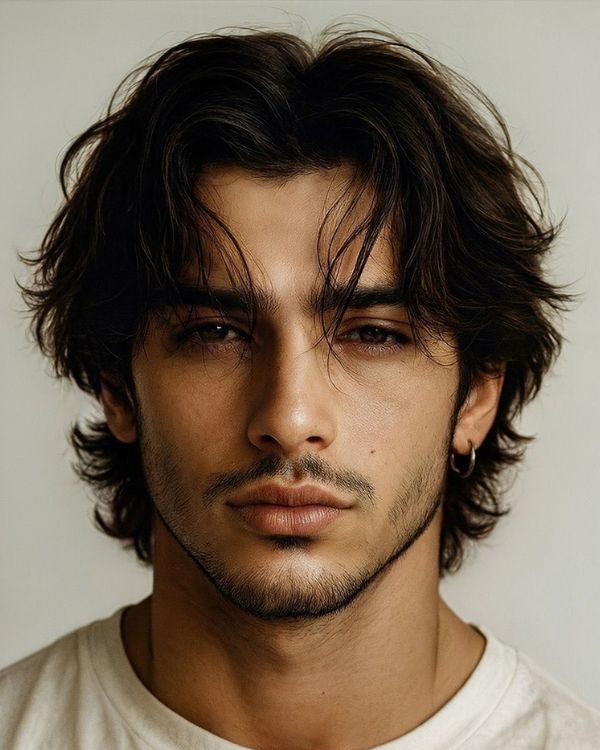
Messy flow features longer hair that moves naturally away from the face and around the sides. The shape is softer than a slicked-back style, with loose strands and gentle layers creating a relaxed appearance. It is especially effective on medium-length hair that has enough weight to fall naturally.
Apply a lightweight leave-in product to damp hair, then use your fingers to guide the front backward while drying. Avoid pulling the hair tightly with a brush, as this can remove the loose movement that defines the style. Cutting your hair correctly can reduce styling time and help you look better with less product.
The main challenge with messy flow is managing bulk around the ears and neckline. Ask your barber for blended layers that preserve length while keeping the outline balanced. The hair can move freely without becoming unnecessarily heavy in the back and sides.
Voluminous Messy Look
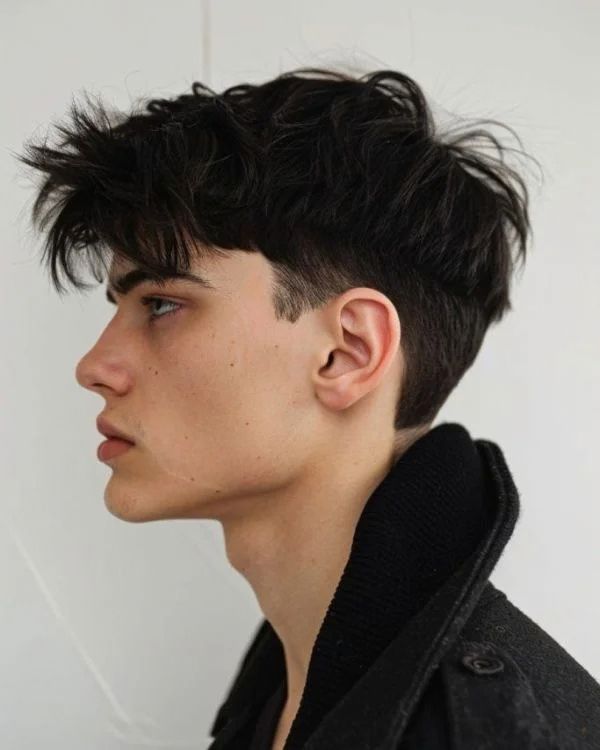
A voluminous messy hairstyle combines height at the roots with an uneven, airy finish. The front and crown usually carry the most lift, while the sides remain more controlled. This arrangement gives the haircut a fuller appearance without requiring every strand to stand upright.
Start with damp hair and apply a lightweight volumizing mousse near the roots. Blow-dry while lifting the hair with your fingers, directing the airflow underneath the sections you want to raise. Once the hair is dry, use a small amount of matte clay to define individual pieces without flattening the volume.
Hair that is naturally thick may hold this shape easily, while fine hair often benefits from a lighter cut with carefully placed layers. Avoid applying heavy wax directly to the roots because it can make the top collapse. The goal is to create lift that still allows the hair to move.
Messy Long Hair
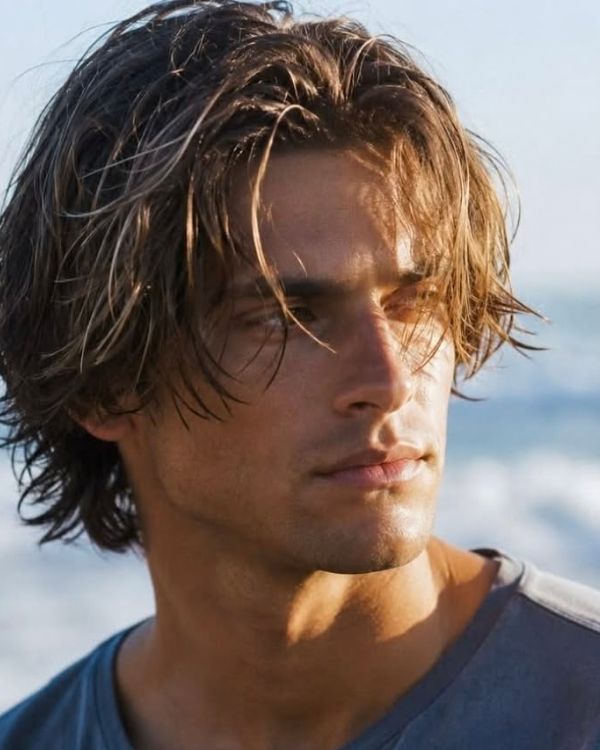
Long messy hair looks distinctive when the length has movement instead of hanging in one heavy shape. Layers around the sides and ends can help distribute the weight, allowing the hair to fall more naturally. Straight hair can look relaxed with loose strands, while waves and curls add their own texture.
After washing, apply a lightweight leave-in conditioner to damp lengths. Let your hair air-dry when possible, or use a diffuser on low heat if it has a natural wave or curl pattern. Once dry, separate a few sections with your fingers to bring out the texture without making the hair look overly styled.
It is important to pay attention to the ends and overall shape of long hair. Trim damaged ends when necessary and ask for layers that suit your natural density. Avoid heavy styling products near the scalp, especially if your hair becomes oily quickly, because they can leave the roots looking flat.
Handsome Short Tousled Style with Low Taper Fade
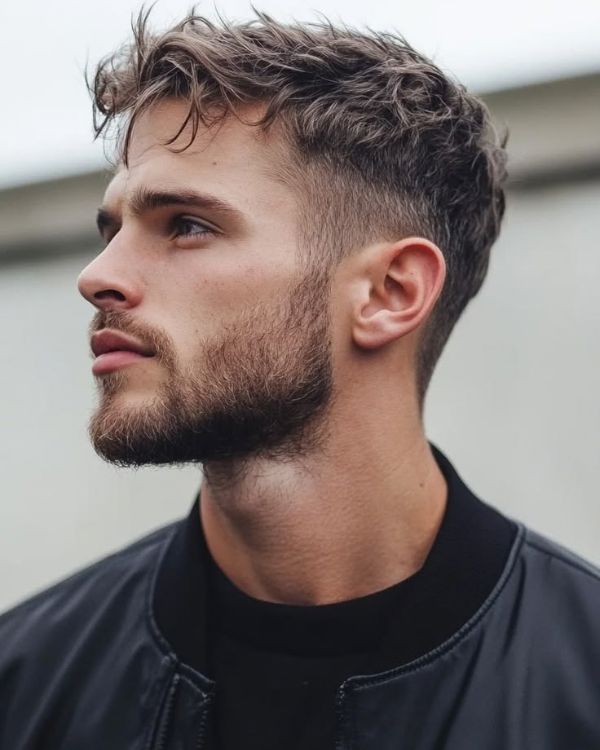
A textured top is paired with a low taper that gradually shortens the sideburns and neck. The subtle taper keeps the edges neat, while the tousled top adds movement. It is a good option for men who want a relaxed finish without a dramatic fade.
Work a small amount of matte styling paste through dry or nearly dry hair. Make an irregular shape by lifting the front slightly and moving a few sections sideways. Keep the finish soft rather than glossy, so the texture remains visible instead of looking pressed into place.
Straight and slightly wavy hair can both work well with this cut. Ask your barber to leave enough length on top for the strands to separate naturally, and request a gradual taper rather than an abrupt change in length. Occasional touch-ups around the ears and neckline will maintain the clean outline.
Messy Brush Up
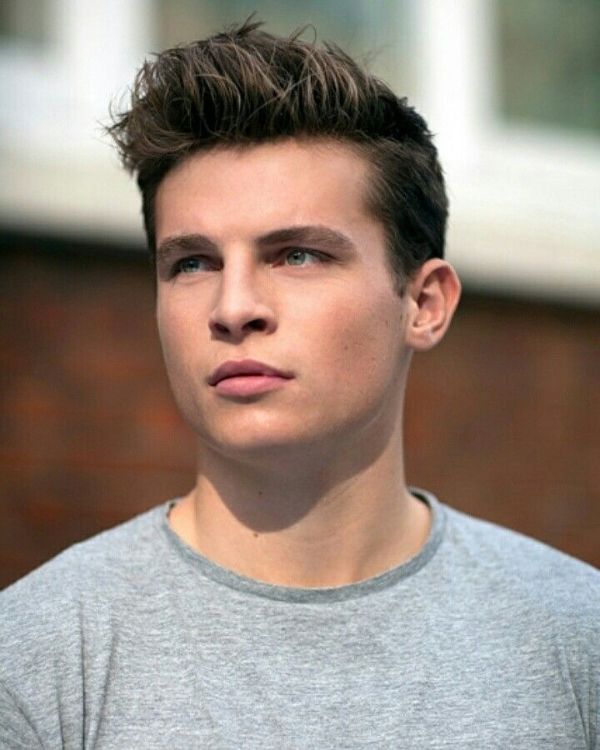
A messy brush-up directs the front upward while allowing the rest of the hair to keep a loose, textured shape. Unlike a carefully sculpted quiff, this version has uneven strands and a less formal finish. The extra height at the front gives short or medium-length hair a stronger outline.
Apply a lightweight mousse to damp hair and blow-dry the front upward using your fingers. Once the hair is dry, rub a little matte clay between your palms and pinch selected strands to create separation. Concentrate on the front and crown instead of coating every section with product.
This style is most manageable when the front has enough length to lift without falling immediately forward. Men with straight hair may need a little more blow-drying, while naturally wavy hair often provides movement on its own. Keep the sides shorter if you want the raised top to remain the main feature.
Long Messy Waves
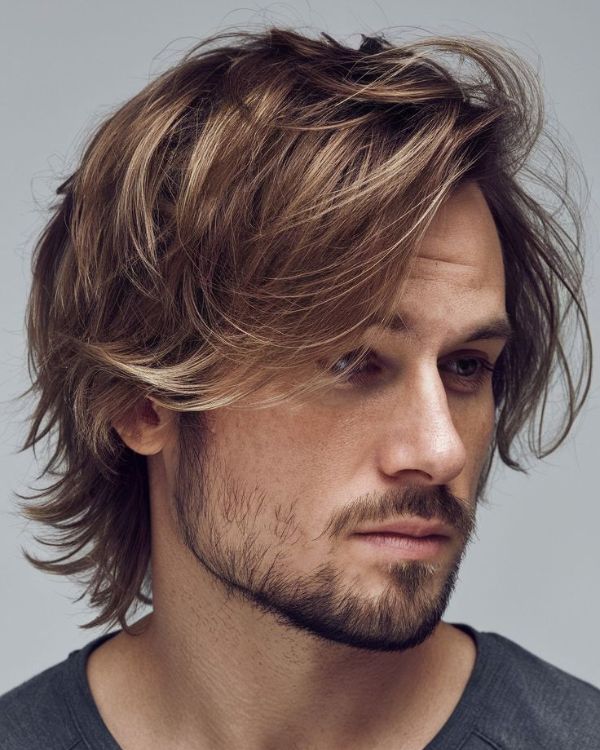
Long messy waves combine natural bends with a loose, flowing shape. The waves create movement through the lengths, while soft layers help prevent the hair from appearing too dense around the shoulders. The overall effect is relaxed without requiring a sharply defined part or perfectly arranged strands.
Apply leave-in conditioner to damp hair, followed by a small amount of wave cream if needed. Scrunch the lengths gently with your hands and allow them to dry naturally. If you use a diffuser, keep the heat low and avoid repeatedly touching the hair while it dries, as this can increase frizz.
Heavy waxes and thick styling pastes can pull longer waves down and make them look greasy. Choose lighter products that support the natural pattern instead. Trim the ends when they become dry or split, and ask for subtle layers if the hair feels too heavy to move freely.
Short Messy Crew Cut
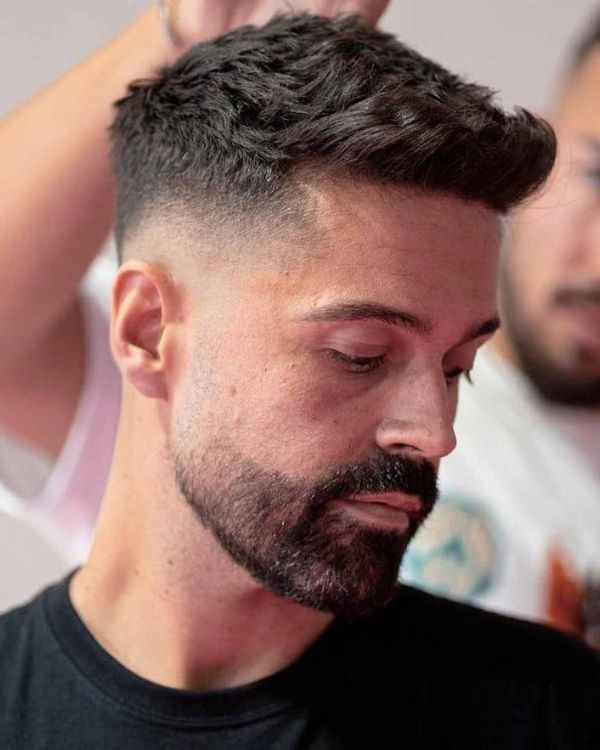
The messy crew cut gives a familiar short haircut a more relaxed finish. The hair on top is left slightly longer than the sides and textured so it does not sit as one smooth surface. This creates a practical style that looks casual rather than overly formal.
Once your hair is dry, rub a small amount of matte paste between your palms and work it through the top. Push the front forward or slightly upward, then separate a few small sections with your fingertips. Keeping the strands uneven helps create texture without turning the haircut into a row of stiff spikes.
This cut is useful for men who do not want to spend much time styling their hair. Straight and slightly wavy hair can both work, although the final shape depends on the top length and natural growth direction. Keep the neckline and side edges tidy to maintain the contrast with the textured top.
Messy Mullet
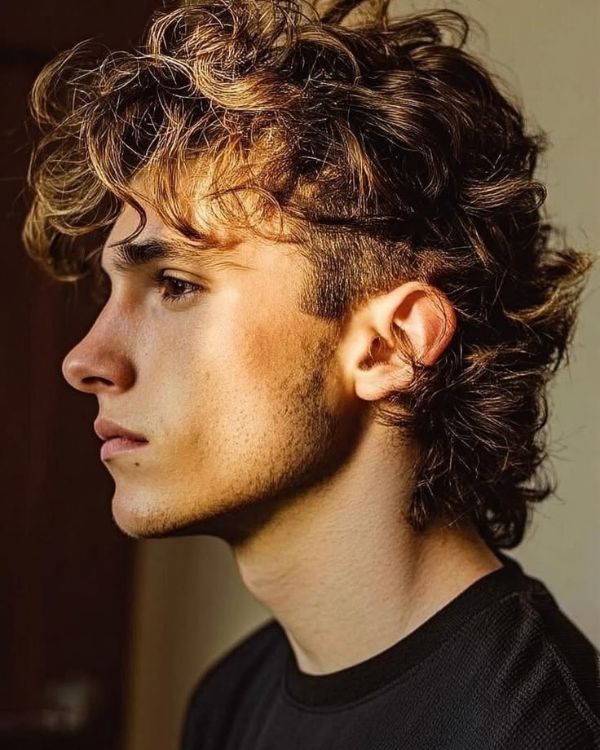
A messy mullet keeps the front and sides relatively short while allowing extra length at the back. Soft layers around the crown connect these different lengths and prevent the haircut from looking like two separate shapes. The messy finish makes the style feel more relaxed than a sharply defined mullet.
Use a light texture cream on damp hair and let it dry with minimal brushing. When the hair is dry, loosen the crown with your fingers and twist a few strands at the back to emphasize their movement. Matte products usually preserve the uneven finish better than products that create a wet shine.
The cut can be adapted to straight, wavy, or curly hair. Straight hair often benefits from choppy layers, while curls can create a fuller shape naturally. Ask your barber to balance the crown and back according to your hair density, and keep the side edges maintained as the longer sections grow.
Casual, Messy, and Textured
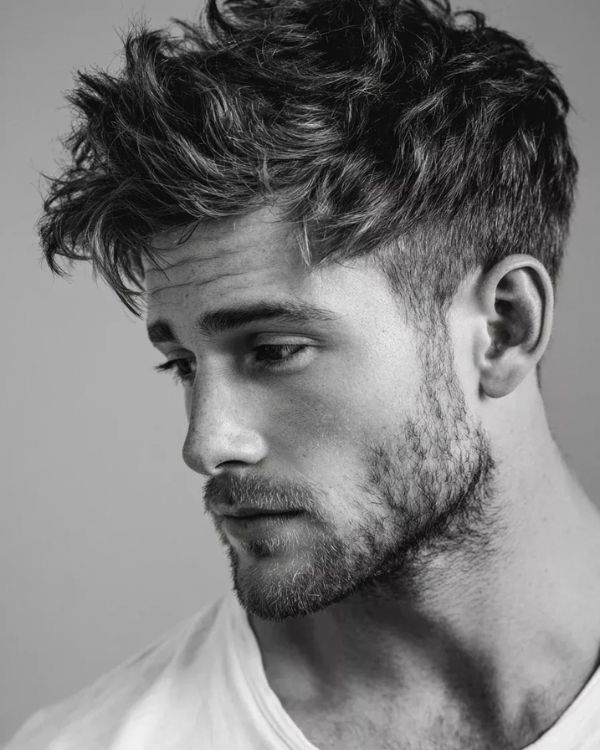
This everyday style focuses on soft texture rather than a dramatic haircut shape. The top has enough length to move, while the sides can remain naturally tapered or slightly shorter. Small differences between sections create a relaxed appearance without requiring a precise part or sharp styling lines.
Apply a small amount of lightweight styling cream to damp hair and work it through with your fingers. Let the hair air-dry or use a low-heat dryer, lifting a few sections as they dry. Once finished, pinch selected strands to create separation instead of combing the whole top into a single direction.
The cut works best when the texture suits the hair’s natural behavior. Straight hair may need light layering to avoid looking flat, while wavy hair can often be styled with very little effort. Use only enough product to shape the strands so the finished look remains soft and touchable.
Messy Shoulder-Length Hair
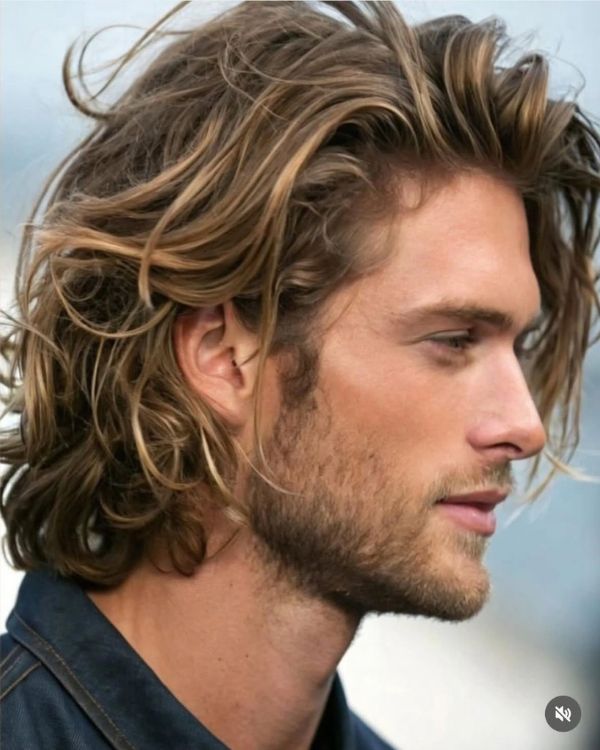
Shoulder-length hair gives men plenty of room to create movement through layers, waves, and loose strands. The main challenge is managing the weight around the sides and back so the hair does not form a bulky outline. Soft layering can help the length fall more evenly without making the ends look thin.
Work a lightweight leave-in conditioner through damp hair, focusing on the mid-lengths and ends. Let the hair air-dry for a natural finish, or use a diffuser if your hair has waves or curls. When it is dry, loosen the sections with your fingers to create a relaxed shape around the face and shoulders.
Keep an eye on the ends and the areas around the neck, where excess bulk can become noticeable. A trim when the shape loses balance can preserve the length while removing damaged ends. Avoid heavy products at the roots, especially if you want the hair to retain volume and movement.
Short Scruffy Hair
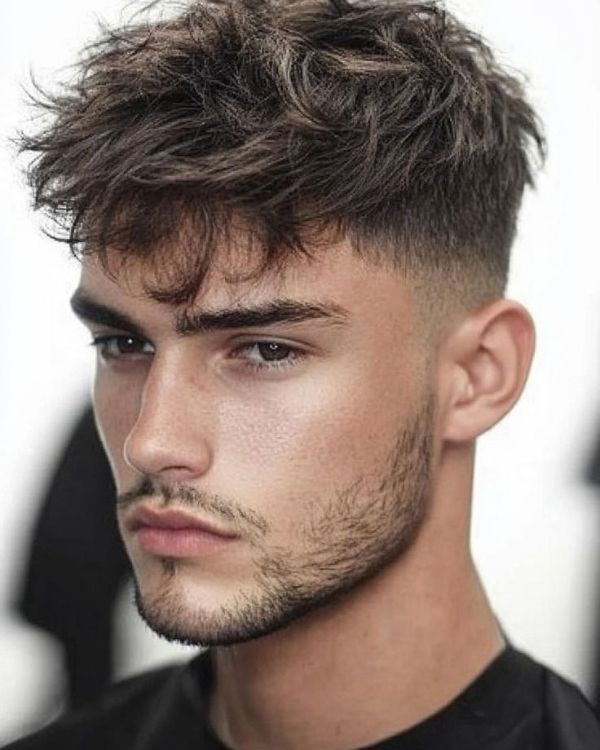
Short scruffy hair has an intentionally rough finish, with small strands pointing in different directions. The top is usually left long enough to create visible texture, while the sides are kept shorter to maintain a clear shape. It offers a rugged alternative to a carefully combed short haircut.
Rub a small amount of matte paste between your fingers and work it through dry hair. Push a few pieces forward, lift others slightly, and leave some sections uneven. Avoid using too much product, as thick layers of paste can make the hair clump together instead of looking naturally scruffy.
This style suits men who prefer a casual haircut that needs little daily effort. Straight or slightly wavy hair often holds the uneven finish well, especially when the barber adds texture to the top. Regularly tidying the side edges helps the overall cut look intentional rather than simply overgrown.
Tousled Curly Hair Fade
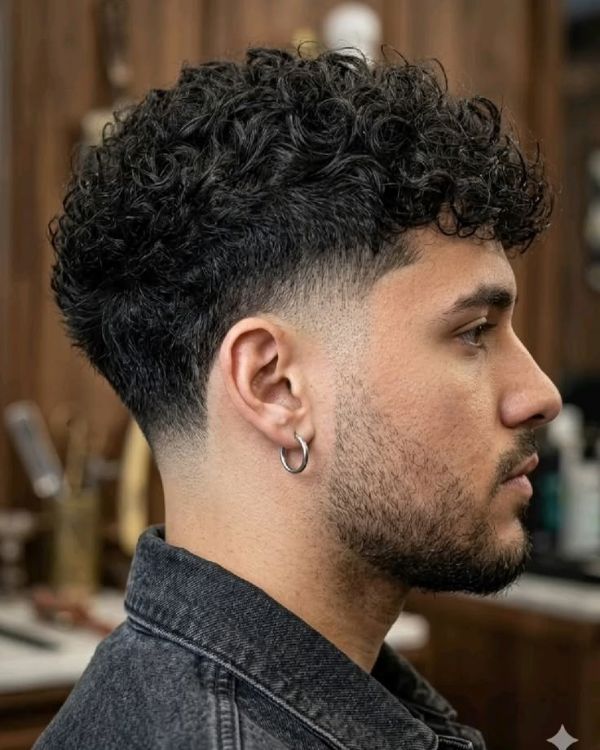
A tousled curly fade combines fuller curls on top with shorter sides that gradually blend into the skin or a short length. The contrast draws attention to the curl pattern without requiring the top to be arranged precisely. Keeping enough length at the crown allows the curls to form a natural shape.
Apply a lightweight curl cream or leave-in conditioner while the hair is damp. Gently scrunch the curls and allow them to dry naturally, or use a diffuser on low heat. Once dry, avoid brushing through them; instead, separate only a few curls with your fingers if you want extra movement.
This haircut is particularly suitable for men whose curls already have a clear pattern. Ask your barber to shape the top according to how the curls shrink as they dry. Maintain the fade when the sides begin to lose their outline, while using a moisturizing product to keep the curls soft.
Messy Mohawk Fade
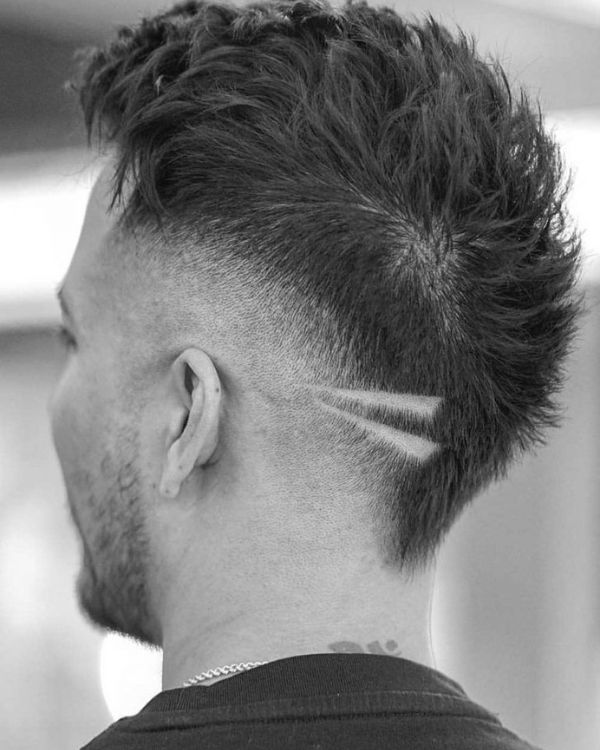
The messy mohawk fade leaves a strip of longer hair through the center, with the sides cut much shorter. Unlike a sharply spiked mohawk, this version uses softer layers and an uneven finish. The central section can lean forward, rise slightly, or move backward depending on its length.
Apply a lightweight texture cream to damp hair and blow-dry the central section while lifting it with your fingers. Once dry, use a small amount of matte clay to define a few strands. Keep the shape loose rather than forcing the hair into a narrow, stiff ridge.
The haircut works best when the central strip is visibly longer than the sides. Straight hair may need textured cutting to create movement, while wavy hair can provide a naturally uneven finish. Ask your barber to shape the width of the center section to suit your head and hair density.
Textured and Messy with Faded Sides
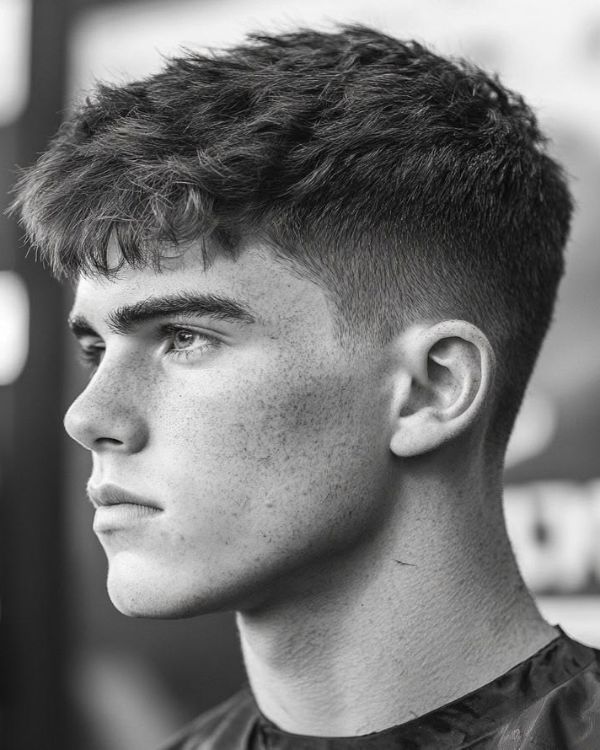
This haircut uses a layered, uneven top against faded sides to create a clear difference in texture and length. The top can be worn forward, lifted at the front, or pushed loosely to one side. Keeping enough length through the crown makes it easier to create movement without making the hair appear thin.
Work a little matte paste through dry or slightly damp hair. Lift the roots with your fingertips and pinch a few sections to make the texture more visible. Avoid smoothing the entire top with a comb, because that can remove the separation that gives the style its character.
A low fade produces a softer transition, while a mid fade creates a stronger contrast with the top. Men with thick hair can ask for some weight to be removed where the hair feels bulky, but the barber should preserve enough density for a full finish. Regular fade maintenance keeps the outline crisp.
Tousled Middle Part
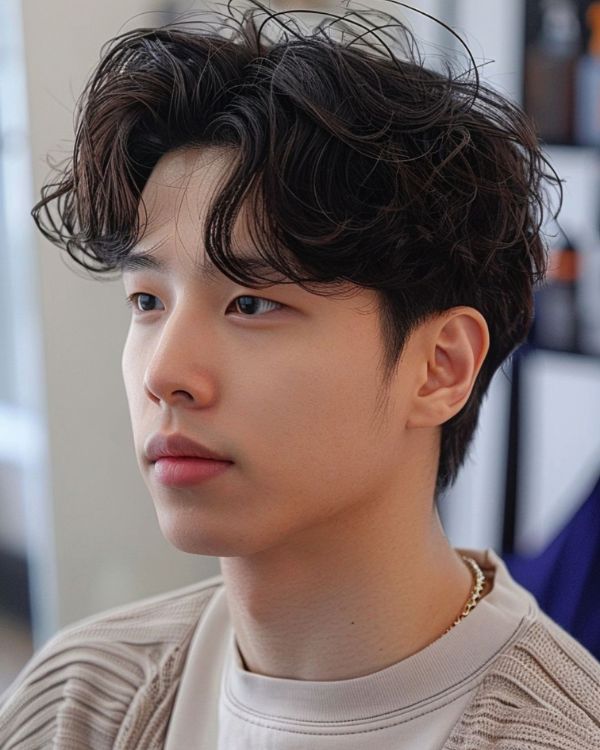
A tousled middle part divides the hair near the center, letting both sides fall loosely around the forehead and temples. The part adds structure, but uneven ends and natural movement keep the style from looking too polished. Medium-length hair is especially useful because it gives the front enough weight to fall into place.
Create the part while your hair is damp, using your fingers or a wide-tooth comb. Apply a small amount of lightweight texture cream, then blow-dry each side away from the center. Finish by loosening a few strands with your fingertips instead of combing everything into a perfectly smooth shape.
Straight hair may need soft layers to create movement, while wavy hair often has enough natural texture already. Ask your barber to leave sufficient length around the front so both sides can fall naturally. Use light products near the roots to prevent the part from looking greasy or flat.
Short Messy Spikes with Mid Skin Fade
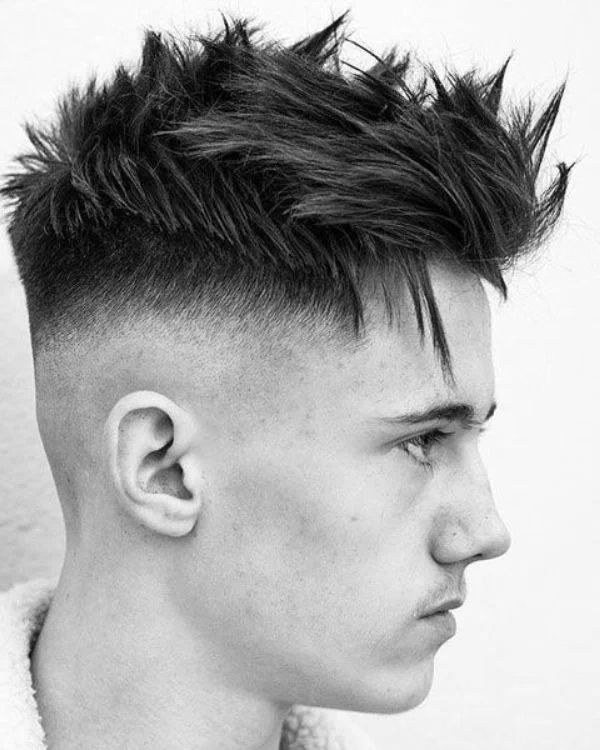
Short messy spikes add lift and definition to the top, while a mid skin fade creates a noticeable contrast around the sides. The spikes should vary slightly in direction and height rather than forming identical points. This keeps the haircut energetic without making it look overly stiff or dated.
Apply a small amount of matte clay or styling fiber to dry hair. Use your fingertips to lift short sections and gently twist their ends into loose spikes. Concentrate on a few areas rather than making every strand stand upright, which can produce a crowded appearance.
Thick, straight hair often holds this shape naturally, while finer hair may need a lightweight volumizing product. Ask your barber to leave enough length on top for the spikes to show clearly. The skin fade will need more frequent touch-ups than the top to maintain its sharp contrast.
Messy, Textured Fringe with Fade
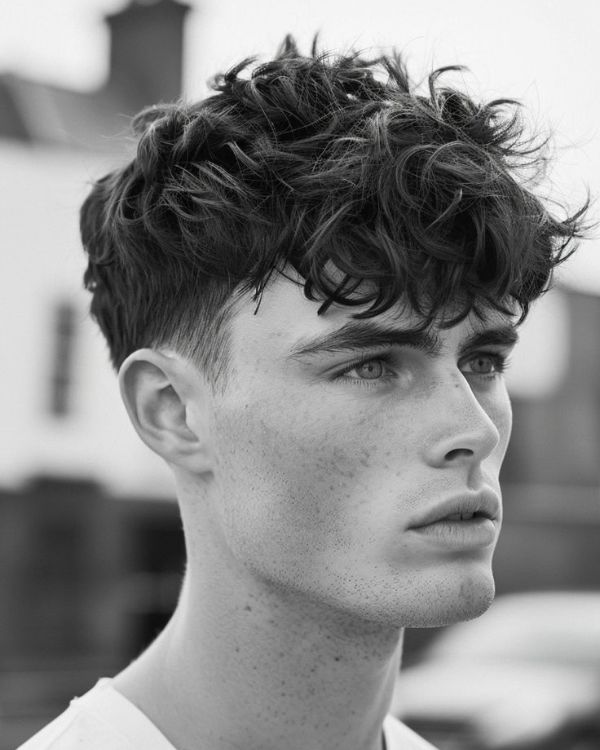
A textured fringe lets the front fall across the forehead in uneven sections, while the faded sides keep the haircut from looking too heavy. The top can be choppy or lightly layered, depending on the thickness of the hair. This combination creates a youthful, relaxed style with a clear outline.
Apply a small amount of matte paste to slightly damp hair and direct the front forward while blow-drying. Use your fingers to split the fringe into separate pieces instead of forming one straight line. A little variation at the ends makes the finish look more natural and helps the texture stand out.
This cut can suit straight, thick, or slightly wavy hair. Men with dense hair may benefit from having some bulk removed from the fringe so it does not hang too heavily over the eyes. Choose a low fade for a subtle outline or a mid fade for a more noticeable contrast.
Messy Curly Mohawk with Taper Fade
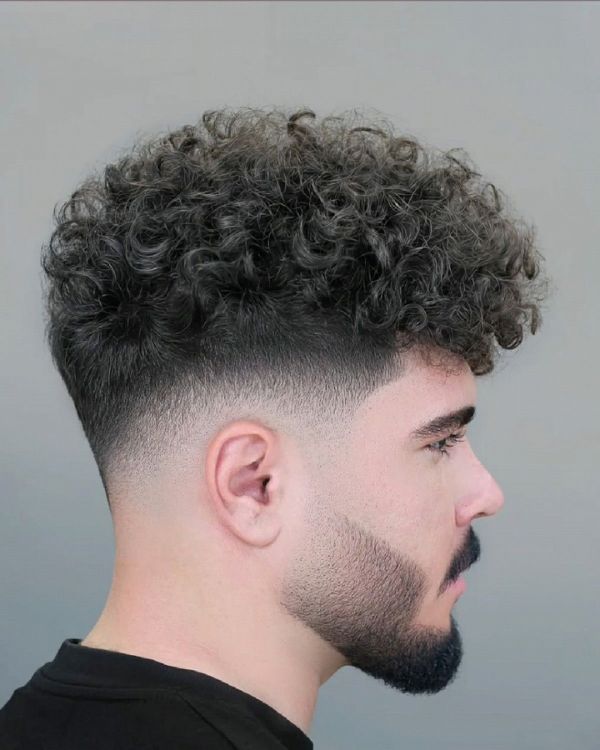
This haircut keeps the curls longest through the middle of the head, while a taper gradually shortens the hair around the temples and neckline. The central curls provide volume and create a mohawk-like outline without requiring a sharply shaved strip. The result is expressive but still relatively easy to wear.
While the hair is damp, apply a small amount of curl cream and scrunch the curls gently. Let them air-dry or use a diffuser on low heat to preserve their shape. When the hair is dry, separate a few curls near the crown to add definition without pulling the entire pattern apart.
Naturally curly and coily hair can work particularly well with this style. Ask your barber to preserve enough length in the middle and shape the sides without cutting too high into the curls. Keep the tapered edges neat and use a moisturizing product to help prevent dryness.
Short Messy Waves with High Skin Fade
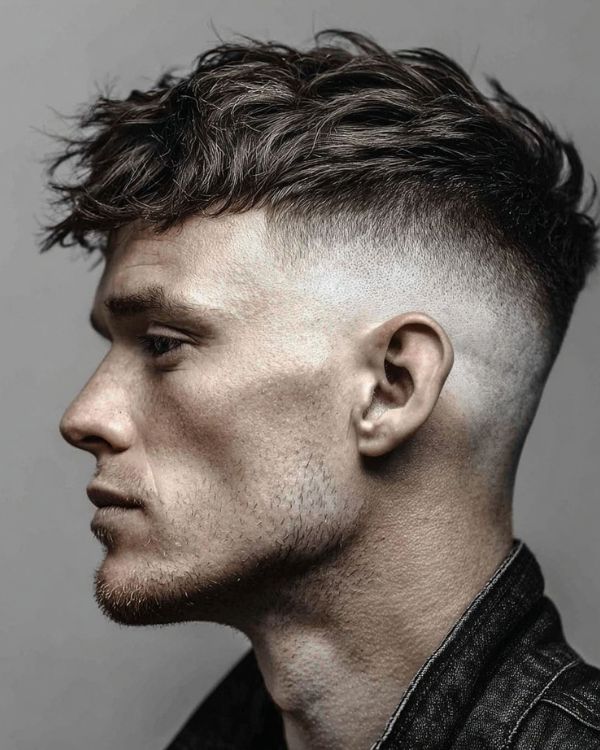
Short messy waves combine visible movement on top with a high skin fade around the sides. The fade begins high on the head, creating a stronger contrast than a low taper. The top should retain enough length for the wave pattern to show rather than being cut so short that it looks flat.
Apply a lightweight styling cream to damp hair and guide the waves with your fingers. Let the hair air-dry or use a blow-dryer on low heat, following the direction of the natural wave. If your hair is naturally straight, a suitable textured cut can add visual movement, but styling products alone will not create a true wave pattern.
This haircut is easiest to maintain when the top naturally forms waves or bends. Ask your barber to leave enough length for the texture to remain visible and blend the fade cleanly into the crown. Keep styling products light so the waves stay separated rather than clumping together.
Thick, Messy Shag
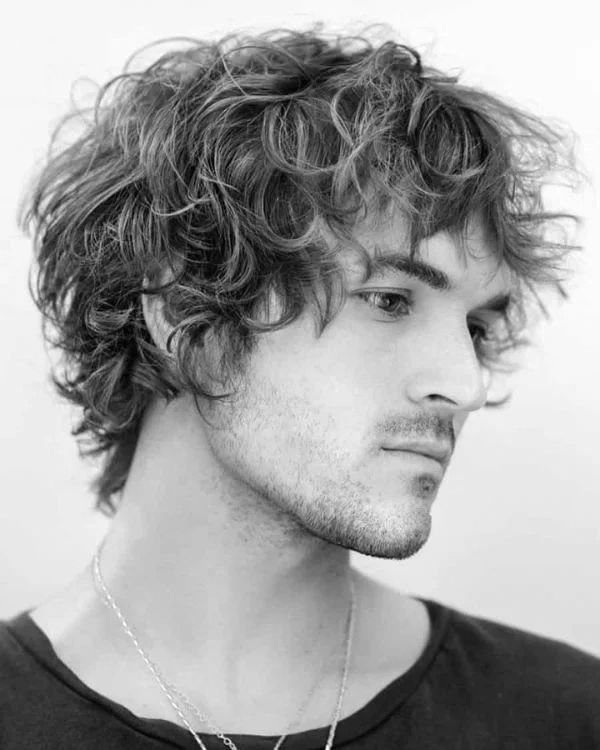
A thick, messy shag uses layers to break up dense hair and give it a softer outline. The crown, sides, and fringe can all carry different lengths, allowing the hair to move instead of forming one bulky mass. Longer pieces around the ears and forehead add character to the overall shape.
Work a lightweight texture cream through damp hair, focusing on the mid-lengths and ends. Use your fingers while drying to lift the roots and encourage the layers to separate. If your hair is naturally wavy, air-drying can help preserve its pattern; straight hair may need a little more direction from the dryer.
The most important part of this haircut is balancing the weight without removing too much fullness. Ask your barber for blended layers that suit your hair density and natural growth pattern. Trims every six to eight weeks can help keep the outline balanced, although the exact timing depends on how quickly your hair grows.
Messy Side-Swept Style
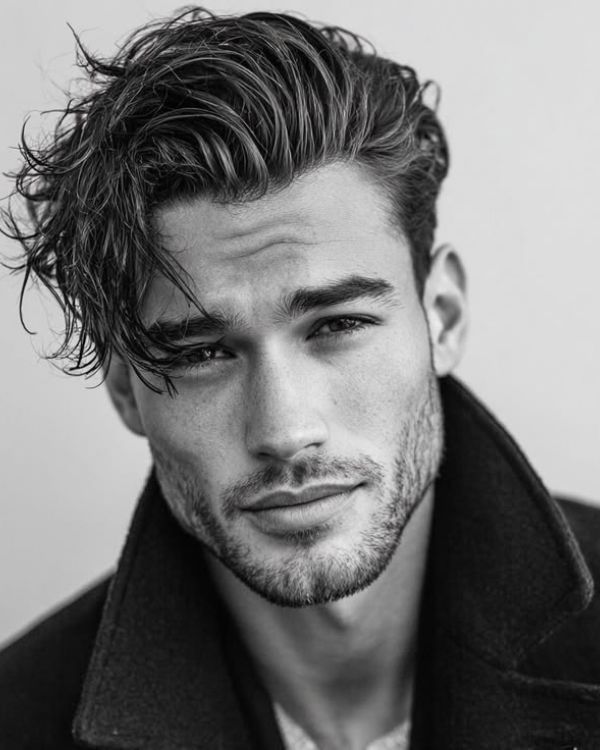
A messy side-swept hairstyle directs the front toward one side while leaving the top soft and textured. The longer fringe creates movement across the forehead, and the uneven finish prevents the hair from looking overly formal. The sides can be tapered or kept at a moderate length, depending on how much contrast you prefer.
Start with slightly damp hair and apply a small amount of styling cream. Use your fingers or a vent brush to guide the front diagonally as you blow-dry on low or medium heat. Finish with a little matte paste on selected strands to preserve separation without making the hair rigid.
This style works well with straight and wavy hair, especially when the front is long enough to move sideways comfortably. Ask your barber to follow your natural parting and avoid cutting the fringe too short. If the front tends to fall back into place, drying the roots in the desired direction can improve hold.
Long, Messy Curly Hair
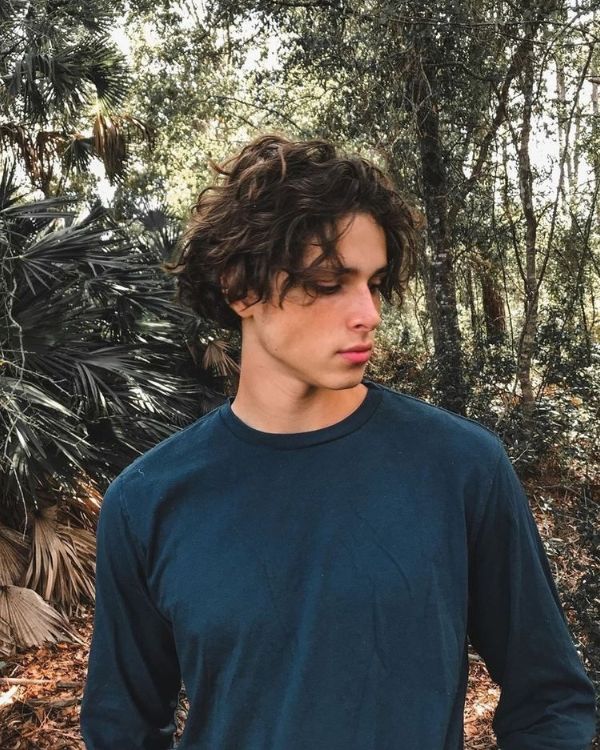
Long curly hair creates a distinctive shape through its natural volume and varied curl patterns. Some strands can fall around the forehead and ears, while others add fullness through the crown and back. Layers can help distribute the weight, especially when thick curls make the sides look too wide.
Apply leave-in conditioner to damp hair, followed by a small amount of curl cream if needed. Scrunch the curls gently and let them dry naturally or use a diffuser on low heat. Once dry, use your fingers to loosen a few sections, avoiding brushes that can separate the curl pattern and create frizz.
Long curls need moisture and a balanced shape to stay manageable. Trim split ends when necessary and ask your barber for long, blended layers if the hair feels too heavy. Avoid aggressive thinning, which can leave curly ends looking uneven or make different sections shrink at different rates.
Fluffy Curls
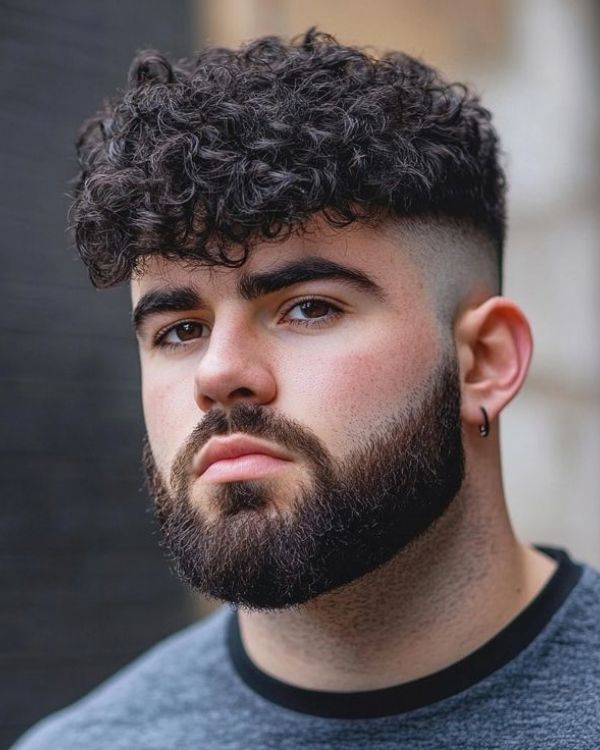
Fluffy curls have a soft, airy appearance with volume extending away from the scalp. Rather than separating every curl into a sharply defined coil, the style allows the hair to expand naturally. This works especially well for men with loose curls or dense hair that creates fullness around the crown.
Apply a lightweight leave-in conditioner to damp hair and scrunch upward with your hands. Use a diffuser on low heat if you want extra lift at the roots, and avoid touching the curls too much while they dry. Once dry, gently lift the roots with your fingertips to restore volume without brushing through the lengths.
A well-shaped haircut helps prevent fluffy curls from becoming too wide at the sides. Ask your barber for soft layers that preserve fullness while removing excess weight where needed. Heavy gels and waxes can flatten the hair, so choose a light curl cream that keeps the curls soft and flexible.
Messy Man Bun
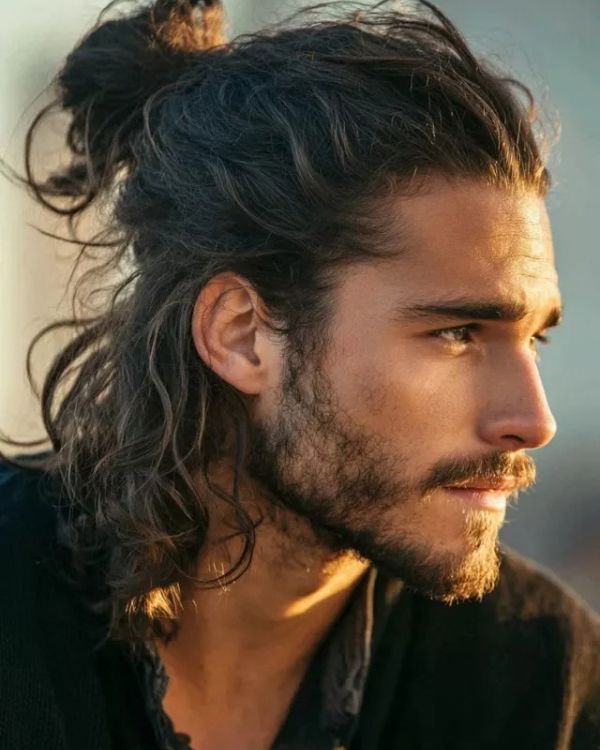
A messy man bun gathers long hair into a loose knot while allowing a few strands to remain around the temples or neck. Unlike a tight, perfectly smoothed bun, this version keeps some natural texture and a slightly irregular outline. It is practical for keeping hair away from the face without losing the relaxed look of longer hair.
Gather your hair at the crown or slightly lower at the back, depending on where it sits comfortably. Twist the length into a loose bun and secure it with a soft hair tie, leaving the ends tucked in loosely. If freshly washed hair slips out easily, a little texture spray can help it stay together.
Avoid pulling the bun too tightly, particularly if you wear it for many hours. Repeated tension can cause breakage around the hairline, so vary the placement and let your hair down when practical. Trim damaged ends when needed to keep the loose lengths looking healthy.
Messy Short Spiky Hair Fade with Beard
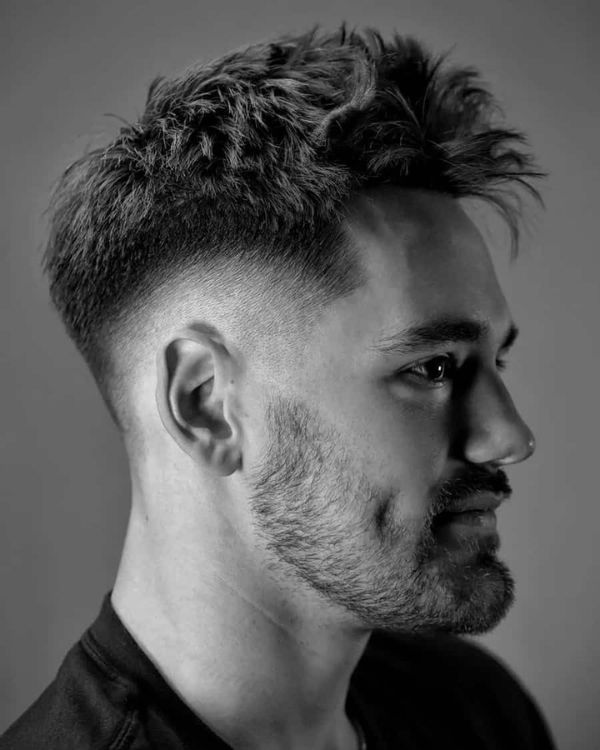
Short, textured spikes paired with a fade and beard create contrast across the face. The top provides movement, the faded sides keep the haircut neat, and the beard adds definition around the jaw. Keeping the beard and sideburn transition balanced helps the overall appearance feel connected rather than divided into separate sections.
Rub a small amount of matte clay between your palms and apply it to dry hair. Lift selected sections into loose spikes, varying their direction so the top does not look uniform. For the beard, use a little beard oil if needed and trim the neckline and cheek edges to maintain the desired shape.
This combination often works well with thick or straight hair, although the spike length can be adjusted for finer hair. Ask your barber to blend the fade naturally into the sideburns and beard. A low fade creates a softer look, while a mid fade makes the contrast more noticeable.
Tousled Mod Cut
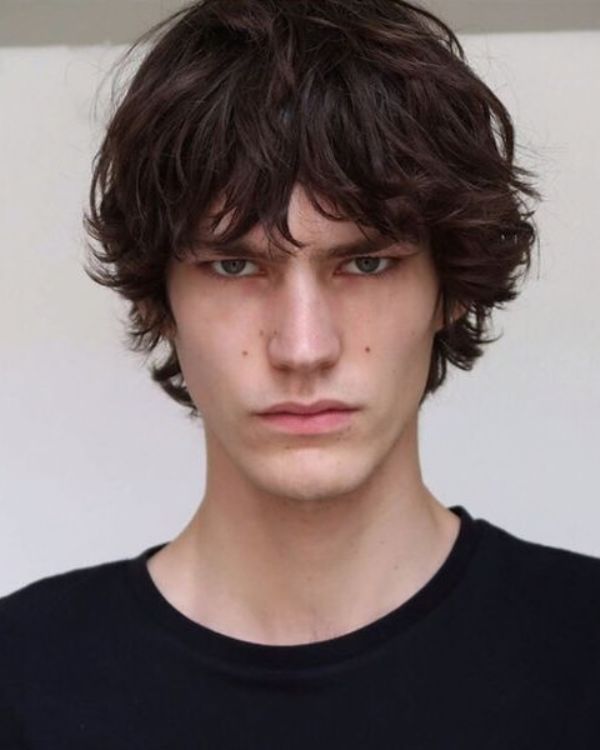
The tousled mod cut takes inspiration from classic rounded haircuts, with a fuller outline, a textured fringe, and length around the ears. Soft layers give the hair movement and prevent the shape from looking too solid. The finish is relaxed, making it a good option for men who prefer a retro influence without a perfectly polished style.
Apply a small amount of lightweight styling cream to damp hair. Use your fingers while blow-drying to encourage movement around the crown and guide the fringe toward the forehead. Finish with a little matte paste on the ends if you want more separation, keeping the product light enough to preserve the natural shape.
Straight and wavy hair can both suit this cut when the length and layering are adjusted properly. Ask your barber for a fringe that follows your forehead rather than a heavy, blunt line. Trimming around the ears and neckline helps preserve the rounded silhouette while allowing the top to remain tousled.
Best Products to Create Messy Hair for Men
Volumizing Shampoo and Conditioner
A volumizing shampoo and conditioner can help fine or flat hair feel lighter and appear fuller. Choose a formula that suits your scalp, and apply shampoo mainly at the roots. Use conditioner mostly on the mid-lengths and ends, since too much near the scalp can leave the hair looking weighed down. These products support the styling process, but the haircut and drying technique also play important roles in creating volume.
Lightweight Sea Salt Spray for Men’s Hair
Sea salt spray can add grip and texture, making it easier to create a tousled finish. Spray a small amount onto damp hair and scrunch the sections you want to emphasize. It is particularly useful for straight or wavy hair that tends to fall flat, although it does not create permanent waves in naturally straight hair. Start with a light application, as frequent or excessive use can leave hair feeling dry, especially if it is already coarse or curly.
Styling Clay with Natural Ingredients
Styling clay can provide a matte finish and help separate strands without the glossy appearance of some gels. Formulas may contain ingredients such as kaolin clay or beeswax, but the overall formula matters more than any single ingredient. Warm a pea-sized amount between your palms and work it through dry hair, concentrating on the top and ends. Start small and add more only when necessary, since excess clay can make the hair heavy and harder to wash out.
How to Style a Messy Men’s Hairstyle
Creating messy hair is about building texture and shaping it without removing all its natural movement. Follow these steps to give your haircut a relaxed finish that suits your hair type and length.
Step 1: Wash and Condition Your Hair
Wash your hair with a shampoo suited to your scalp, then apply conditioner to keep the lengths manageable. Rinse thoroughly and gently pat your hair with a towel to remove excess water. Avoid rubbing vigorously, as this can increase frizz and make the hair harder to shape.
Step 2: Keep Hair Slightly Damp
Leave your hair slightly damp before applying styling products. Hair that is dripping wet can dilute the product, while completely dry hair may be harder to reshape with some styling methods. If your hair dries too quickly, lightly mist it with water to make styling easier.
Step 3: Add Sea Salt Spray for Texture
Spray a light layer of sea salt spray over the top and other sections where you want more texture. Scrunch or lift the hair with your fingers to encourage separation and movement. Begin with a small amount and add more only if needed, especially if your hair tends to feel dry.
Step 4: Shape with Styling Clay
Once your hair is nearly dry or fully dry, warm a small amount of styling clay between your palms. Work it through the top and use your fingertips to lift the roots, separate strands, and shape the finish. Apply more only where the hair needs extra definition, keeping the final result flexible rather than stiff or greasy.
No Responses