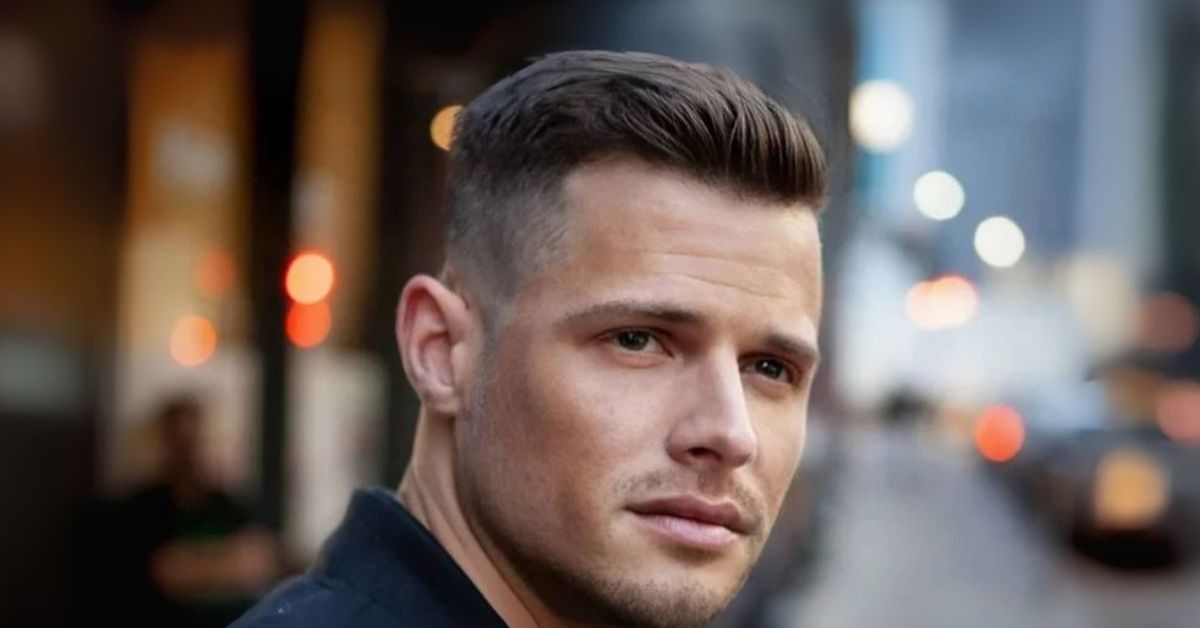
A great short haircut can change your entire look in minutes. The right cut can sharpen your face, add texture to your hair, and give you a clean style without demanding much daily effort. Stylish short haircuts for men are not just about keeping hair short; they are about choosing the right shape, texture, and finish for your features.
From textured crops and clean fades to modern crew cuts and sharp side parts, short styles offer plenty of ways to create a distinct appearance. A slight change in the fade, length on top, or styling direction can make the same basic haircut look completely different. This makes short hair a practical choice for men who want a polished look that still feels personal.
The best short haircut should work with your hair type, face shape, and everyday routine. Whether you prefer a low-maintenance cut or a sharper style that needs a little product, the right details make all the difference. With the right cut and finish, short hair can look fresh, confident, and stylish long after you leave the barber’s chair.
Popular Short Men’s Haircuts
Long Crew Cut With Low Fade
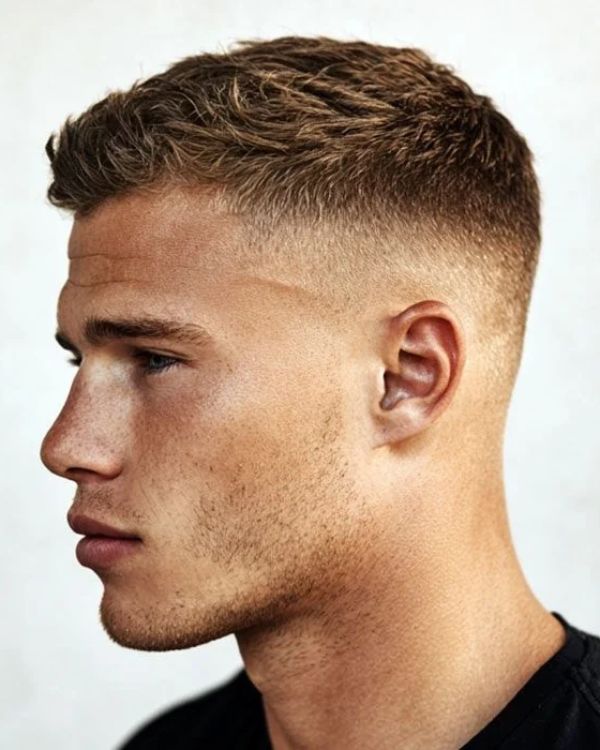
A long crew cut keeps the top longer than a traditional crew cut, usually leaving enough length to create visible texture and movement. The low fade starts close to the ears and neckline, so the sides stay neat without making the haircut look too harsh.
This style works especially well for straight or slightly wavy hair. Ask your barber to keep about 2–3 inches on top and add light texture with scissors. The longer top can be brushed forward, lifted slightly, or styled to one side depending on your face shape.
For daily styling, a small amount of matte clay or styling cream is usually enough. Keep the low fade clean with a trim every 2–3 weeks, while the top can often grow for 4–6 weeks before it needs reshaping.
Brushed Back Undercut
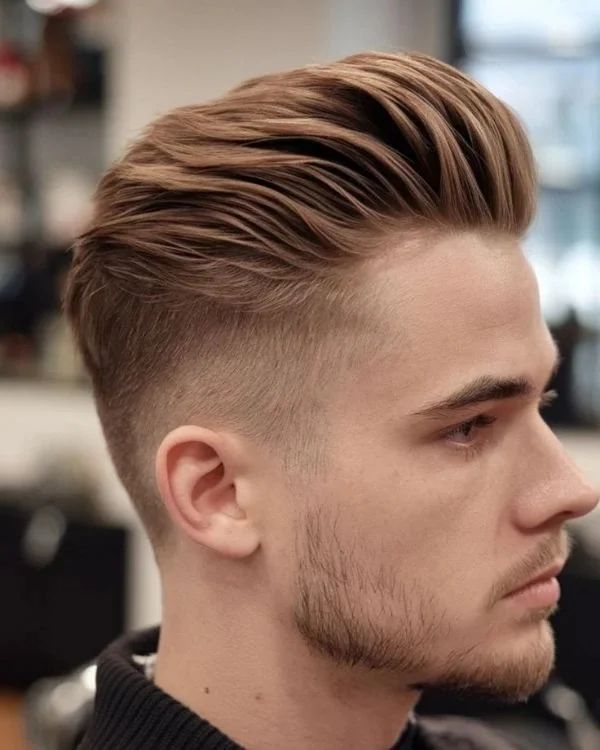
A brushed back undercut keeps the sides and back noticeably shorter than the top. The contrast gives the haircut a sharp shape, while the longer top can be brushed straight back for a clean and controlled finish.
This style works best with straight or slightly wavy hair that is long enough to stay pushed back. Ask your barber to keep around 3–5 inches on top and create a clear disconnect between the top and the shorter sides. This keeps the undercut defined instead of looking like a regular fade.
For styling, apply a small amount of lightweight pomade or matte cream to damp hair. Brush the top backward with your fingers or a wide-tooth comb, then let it air-dry or use a blow dryer for stronger hold.
Side Part
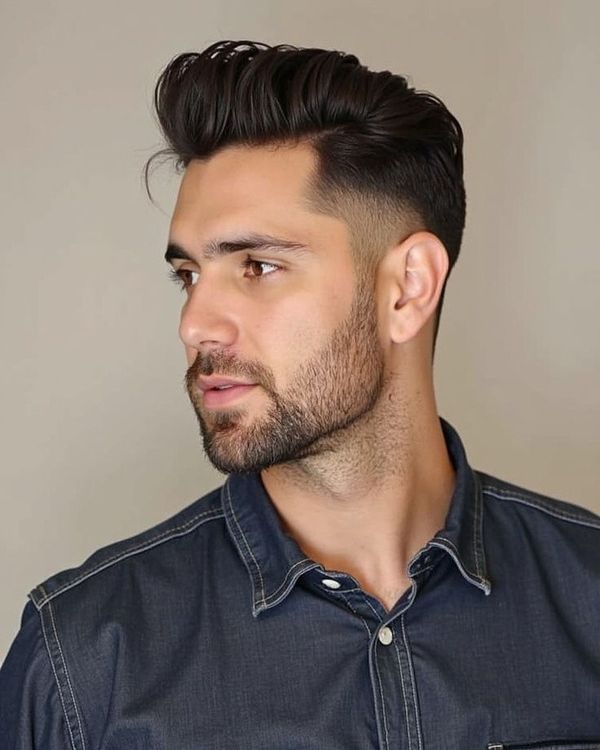
The side part is a clean haircut that uses a defined parting to give the hair a neat shape. The top is usually kept around 2–3 inches long, while the sides can be tapered or faded for a sharper finish.
This style suits straight and slightly wavy hair because the part stays easy to control. Ask your barber to follow your natural part instead of creating a line too far from its usual position. A low taper works well if you want a softer look, while a skin fade creates more contrast.
Use a small amount of matte clay or styling cream on slightly damp hair. Comb the top away from the part and let it settle naturally. A quick blow-dry in the same direction can add volume and help the style stay in place throughout the day.
Classic Buzz Cut
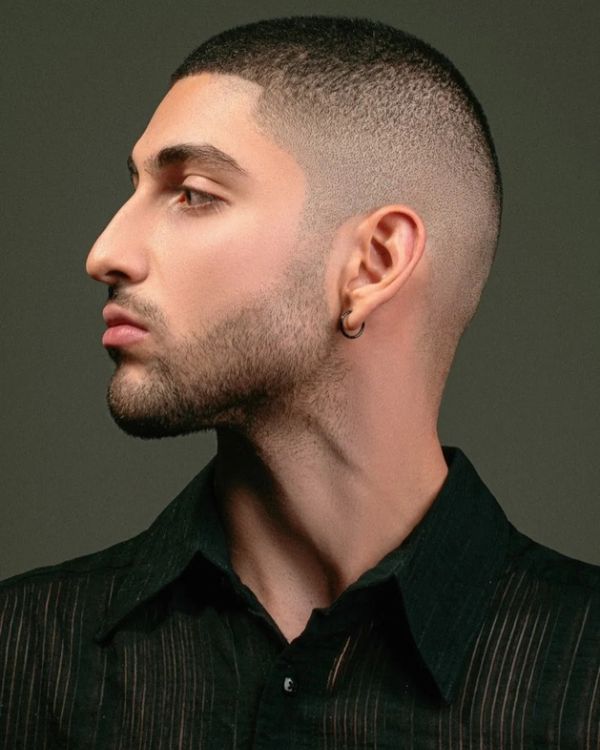
The classic buzz cut keeps the hair short and even, creating a clean shape with very little styling. A #2 or #3 guard on top gives enough length to show the natural texture while keeping the haircut sharp and simple.
For a more defined finish, ask your barber for a slightly shorter length around the sides and back. The neckline and area around the ears should be cleaned carefully because these small details make a big difference when the hair is this short.
A buzz cut needs almost no styling product. The main upkeep is regular trimming, usually every 2–3 weeks, to keep the length and edges consistent. It is a practical choice for men who want a neat haircut without spending time styling their hair each morning.
Fade Cut
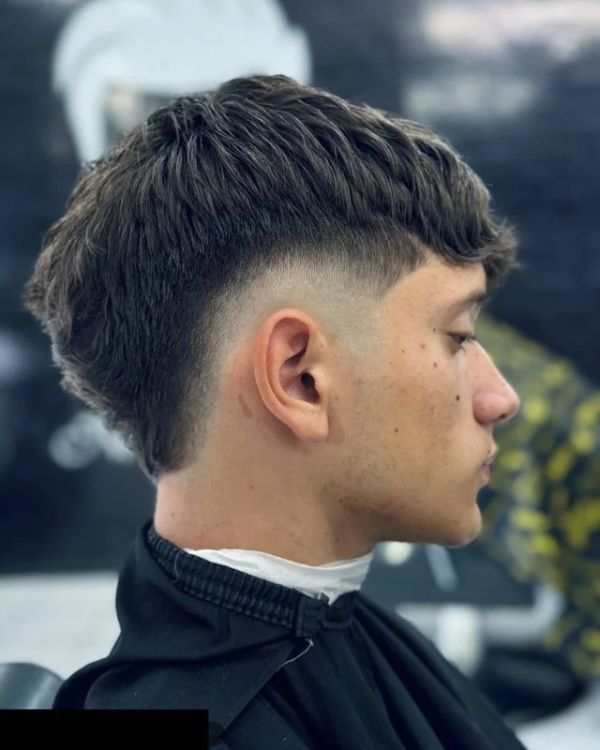
A fade cut gradually reduces the hair length from the top toward the ears and neckline. The smooth change in length gives the haircut a clean shape without making the sides look completely shaved.
You can choose a low, mid, or high fade depending on how much contrast you want. A low fade keeps more hair around the temples, while a mid fade creates a stronger transition. A high fade exposes more of the sides and gives short hairstyles a bolder appearance.
The top can be kept short, textured, or slightly longer to match your preferred style. For a clean fade, most men need the sides refreshed every 2–3 weeks, while the top can be left longer between barber visits.
Short Curly Cut
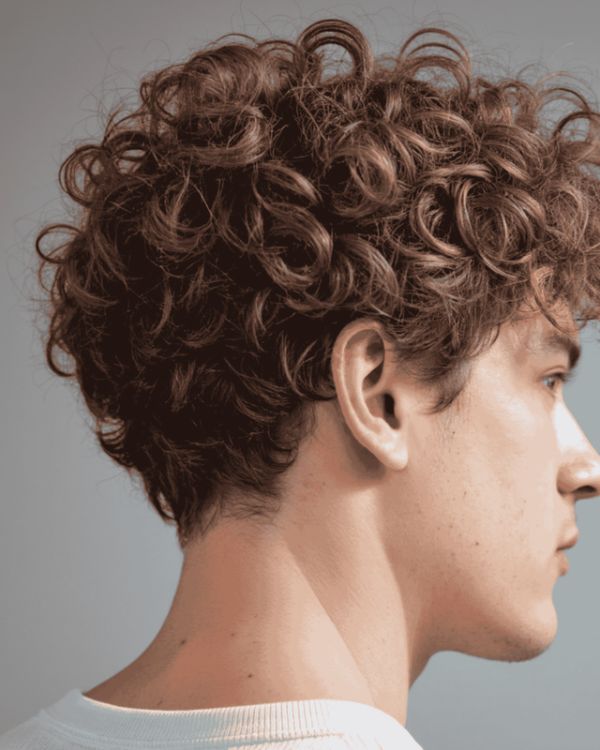
A short curly cut keeps the curls controlled without removing their natural shape. The top is left around 1–2 inches long, while the sides are trimmed shorter to reduce bulk and make the curls look more defined.
For thick or tight curls, ask your barber to remove weight carefully instead of thinning the hair too much. A low taper around the temples and neckline can clean up the edges while keeping the curly texture visible on top.
After washing, apply a small amount of curl cream or lightweight leave-in conditioner to damp hair. Scrunch the curls with your hands and let them air-dry or use a diffuser on low heat. This helps reduce frizz while keeping the natural curl pattern intact.
High Fade
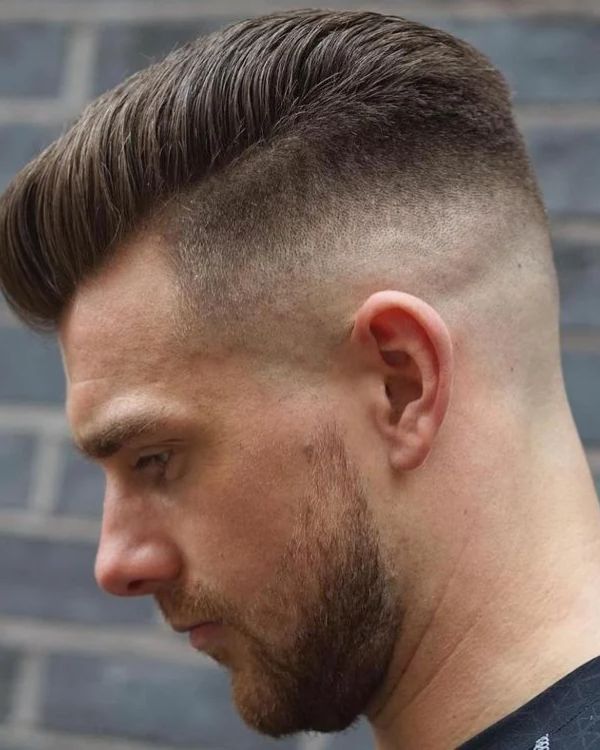
A high fade starts higher on the sides, usually around the temples, and quickly tapers down toward the skin near the ears and neckline. This creates strong contrast between the short sides and the hair on top, giving the haircut a sharp, modern appearance.
The high fade works well with short textured tops, crops, curls, and crew cuts. If you have thick hair, keeping some length on top helps balance the strong fade. Ask your barber to place the fade based on your head shape rather than simply copying a fixed height.
The sides usually need a refresh every 1–2 weeks to keep the fade crisp. For everyday styling, use a small amount of matte clay or cream on the top. Keep the product mainly on the longer hair so the clean fade remains the main feature.
Short Spiky Hair with Low Fade
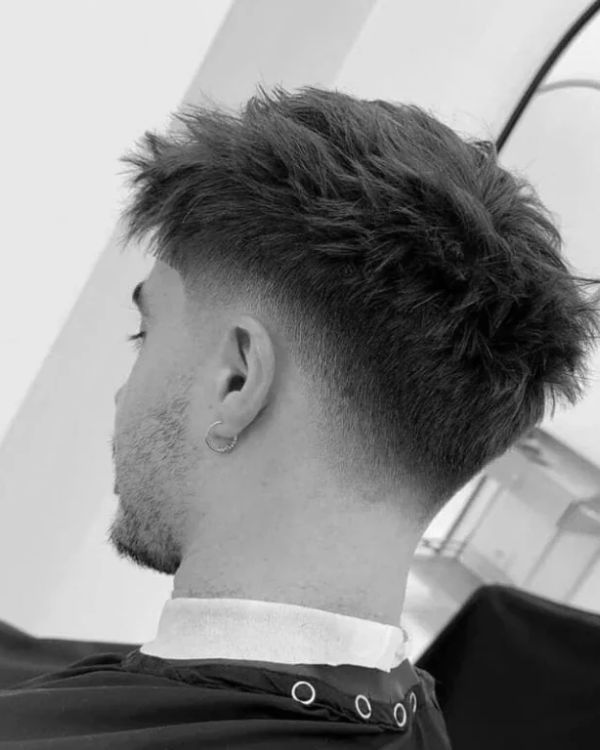
Short spiky hair gives a textured, energetic look without needing a long top. Keep around 1.5–2.5 inches of length on top so the hair has enough structure to form small spikes. A low fade keeps the sides neat while leaving more hair around the temples.
This style works especially well with straight or thick hair that naturally holds shape. Ask your barber to add uneven texture with scissors instead of making every strand the same length. This creates softer spikes that look more natural and less stiff.
For styling, work a small amount of matte clay or fiber through dry hair. Pinch small sections upward with your fingertips rather than creating tall spikes. Refresh the low fade every 2–3 weeks while trimming the textured top less often to maintain its shape.
Tousled Flow

A tousled flow keeps the hair slightly longer on top so it can move naturally instead of sitting in a fixed shape. Around 3–4 inches on top gives enough length for a loose, relaxed finish, while a soft taper around the sides keeps the outline tidy.
This cut suits straight, wavy, and lightly curly hair. Ask your barber for subtle layers through the top rather than heavy thinning. The layers help the hair fall naturally and prevent thicker sections from looking too bulky.
For styling, apply a small amount of sea salt spray to damp hair and work it through with your fingers. Let the hair air-dry for a softer finish, or use a diffuser if your hair has waves. Finish with a light matte cream when you need extra control without losing movement.
Low Taper
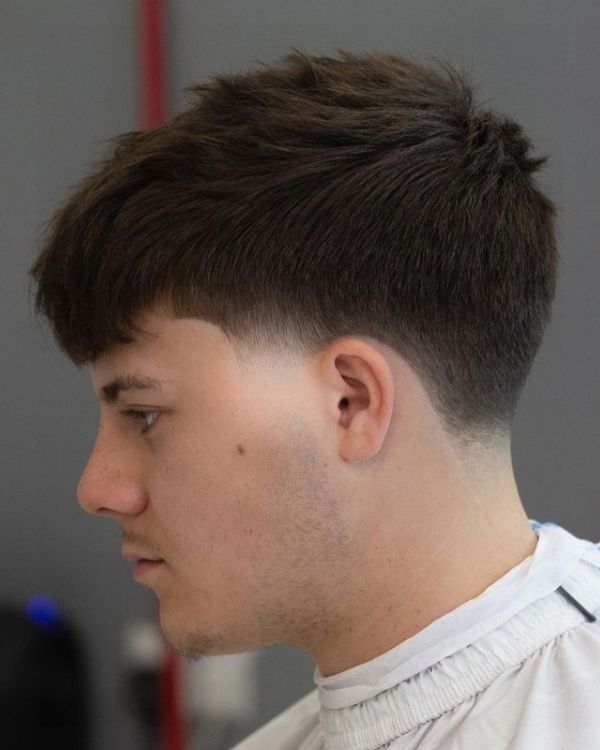
A low taper gradually shortens the hair around the sideburns and neckline while leaving most of the sides fuller. This creates a clean outline without the strong contrast of a high fade, making it a good choice for men who want a subtle and polished haircut.
The taper works with many short styles, including textured crops, crew cuts, curls, and side parts. Ask your barber to keep the taper low and blend it into your natural hairline. This keeps the top and sides connected instead of creating a disconnected look.
A low taper is also easy to maintain. The edges usually look sharp for about 2–3 weeks, depending on how quickly your hair grows. You can leave the top natural or use a small amount of matte cream to add texture and control.
Short Mod Cut
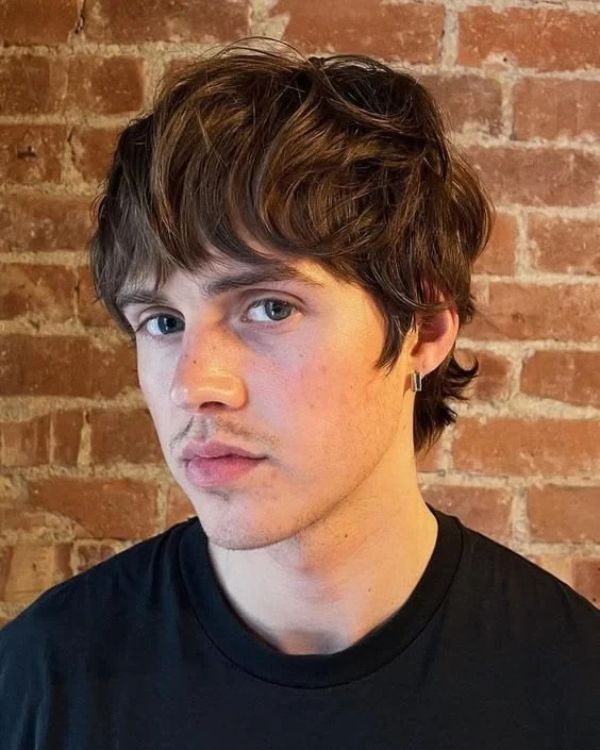
A short mod cut has a rounded shape with a clean outline and noticeable length around the top and sides. The fringe is usually kept around 1–2 inches, giving the haircut a soft, structured appearance without the heavy length of a traditional mod style.
This cut works best with straight or slightly wavy hair. Ask your barber to create subtle layers through the top and keep the sides connected rather than heavily faded. A slightly uneven fringe can make the style look more natural and less rigid.
For styling, use a small amount of matte styling cream on damp or dry hair. Comb the fringe forward and use your fingers to shape the sides. A light blow-dry can add control while keeping the rounded shape and natural texture.
Straight Haircut
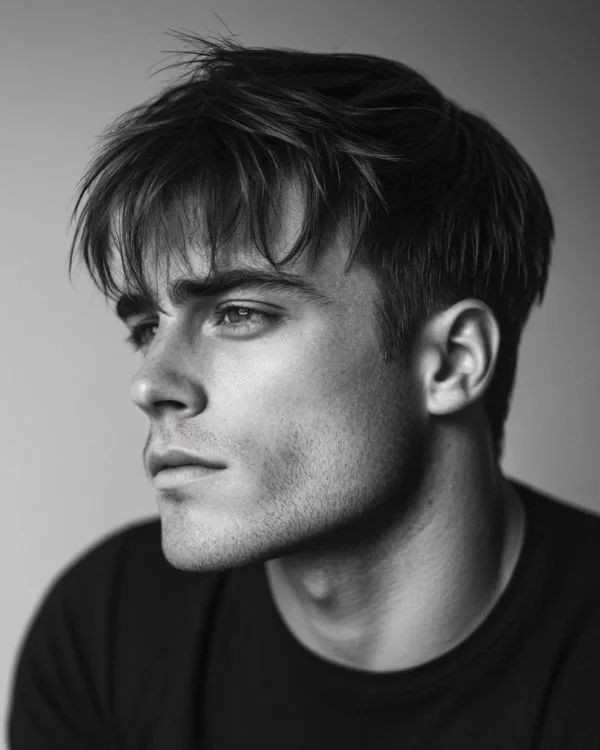
A straight haircut works with the natural direction of straight hair instead of trying to create extra movement. Keeping around 2–3 inches on top gives enough length for a side part, textured finish, or simple brushed style, while shorter sides keep the shape clean.
For thick straight hair, ask your barber for light point-cutting to remove excess weight without making the ends look thin. A low taper around the sideburns and neckline can add a sharper finish while keeping the haircut connected and natural.
Straight hair usually needs little product. Apply a small amount of matte cream or lightweight clay to dry hair and shape it with your fingers. If your hair tends to fall flat, blow-dry the roots upward for a few seconds before applying product.
Quiff Cut
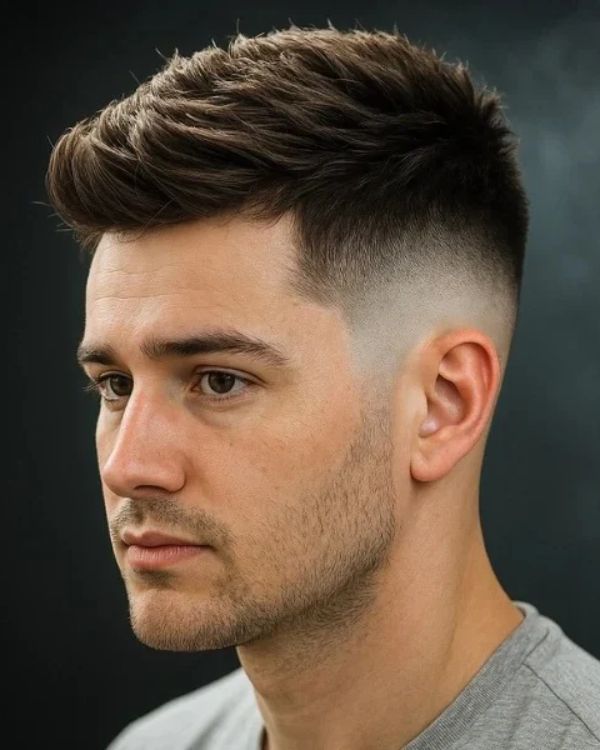
A quiff cut keeps the front longer so the hair can be lifted and swept back, while the sides are kept shorter for a cleaner shape. Around 2.5–4 inches on top gives enough length to build height without making the style difficult to control.
The cut works especially well with straight or slightly wavy hair. Ask your barber to leave extra length through the front and gradually shorten the top toward the crown. A low taper or mid fade can keep the sides neat while putting more attention on the quiff.
For styling, apply a small amount of volumizing mousse or pre-styler to damp hair. Blow-dry the front upward and slightly backward, then use a small amount of matte clay to hold the shape. Avoid heavy product, which can make the quiff look flat and greasy.
Thick Wavy
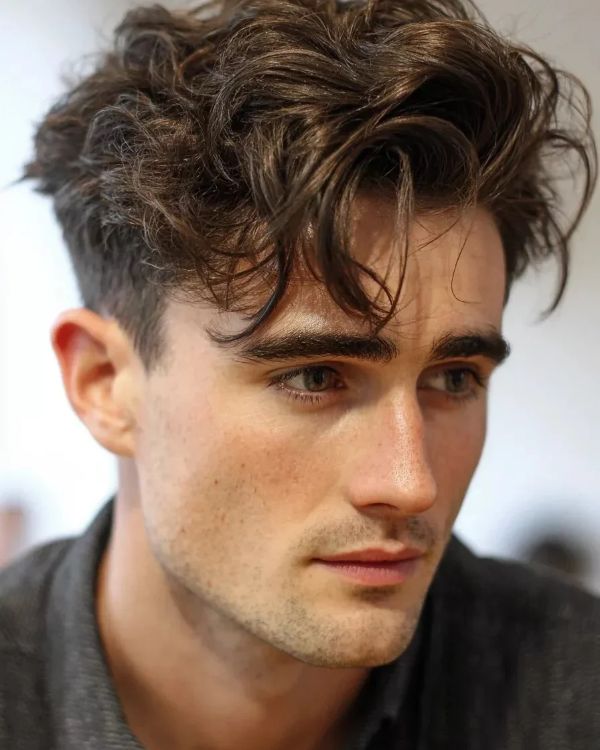
A thick wavy haircut keeps enough length on top to show the hair’s natural movement. Around 2–3 inches on top can give the waves room to form while shorter sides reduce bulk and keep the overall shape controlled.
Ask your barber to remove weight with scissors instead of aggressively thinning the hair. Too much thinning can make thick waves look uneven or frizzy. A low taper around the temples and neckline can clean up the edges without taking away the natural texture.
For styling, apply a small amount of lightweight curl cream or leave-in conditioner to damp hair. Scrunch the waves gently with your hands and let them air-dry. If extra control is needed, finish with a small amount of matte cream rather than a heavy gel.
Short Mullet Cut
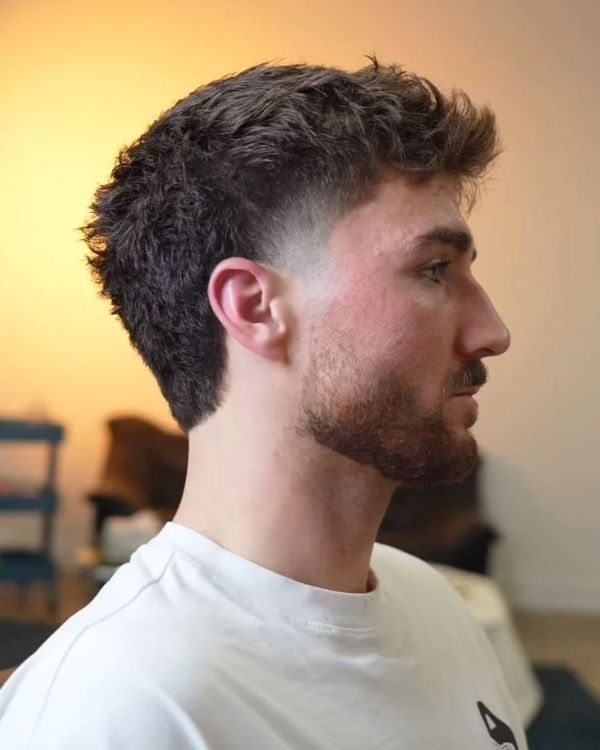
A short mullet keeps the sides and front relatively neat while leaving a little extra length at the back. Unlike a long mullet, the difference is subtle, so the style feels modern without looking overly dramatic.
Ask your barber to keep about 2–3 inches on top and leave the back slightly longer, around 2–3 inches past the neckline depending on your preference. Soft layers help the top and back blend naturally, while a low taper around the temples can make the sides cleaner.
The short mullet works well with straight, wavy, and slightly curly hair. Use a small amount of matte clay or texture cream to separate the layers. Let the back follow its natural direction instead of forcing it into a stiff shape.
Thick Textured Top
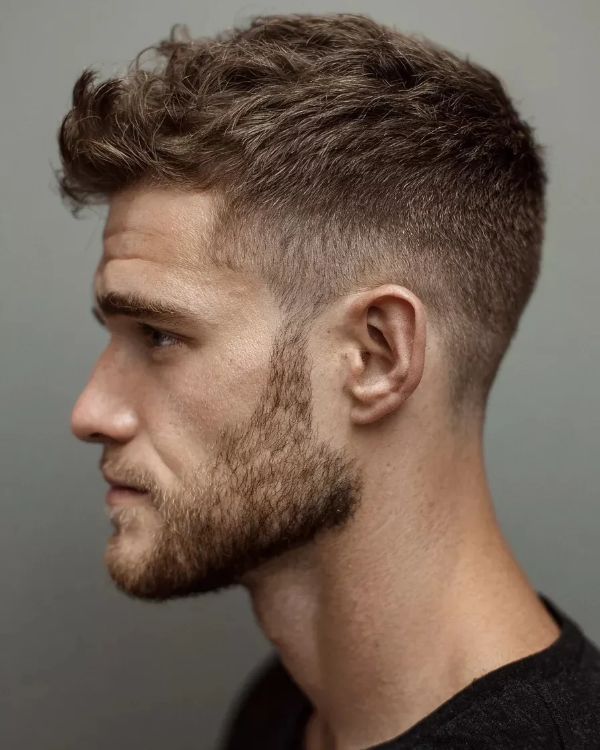
A thick textured top keeps enough length to show the natural density of thick hair while using uneven layers to create movement. Around 2–3 inches on top gives the barber room to add texture without making the hair look bulky or heavy.
Ask for point cutting or scissor texturing through the top instead of removing large amounts of hair with thinning shears. This helps separate thick strands while keeping their natural fullness. A low taper or short sides can make the textured top stand out more clearly.
For styling, apply a small amount of matte clay or texture paste to dry hair. Work it through the roots and ends with your fingers, then pinch a few sections to define the texture. Avoid using too much product, as heavy buildup can make thick hair look flat.
Modern Caesar Cut
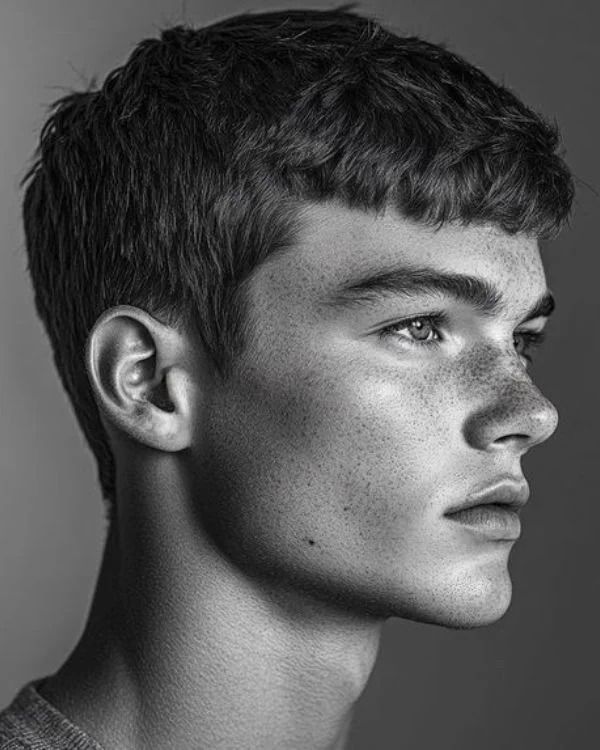
A modern Caesar cut keeps the top short and textured, with a forward fringe that usually sits just above or near the eyebrows. Keeping about 1–2 inches on top gives the hair enough texture while making the haircut easy to manage.
This style works particularly well with straight or thick hair. Ask your barber for a short, slightly uneven fringe rather than a perfectly straight line. A low or mid fade on the sides can add contrast, while a taper gives the cut a softer finish.
For styling, use a small amount of matte clay or texture paste on dry hair. Push the hair forward with your fingers and lightly separate the top for definition. The short length usually needs only a quick touch-up each morning.
Fringe Cut
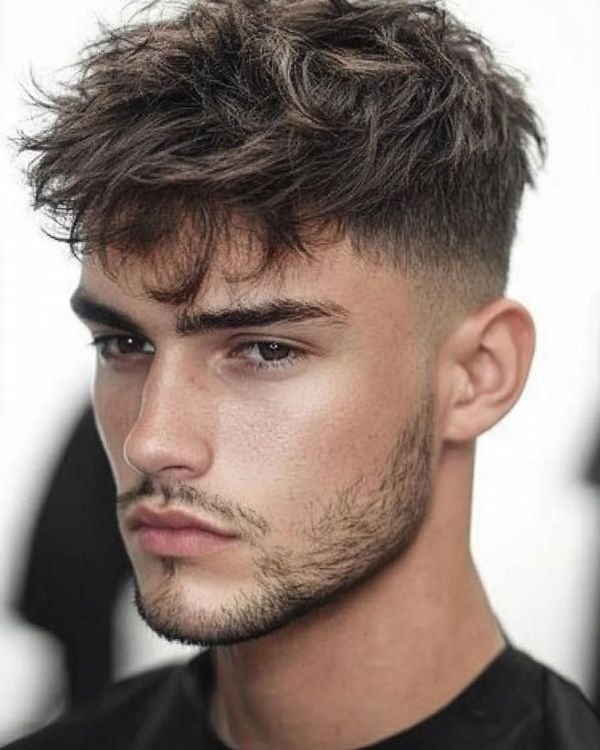
A fringe cut keeps the front hair longer so it falls naturally across the forehead. The top usually has enough length to create movement, while the sides are trimmed shorter to give the haircut a balanced shape. A textured fringe adds separation and prevents the front from looking too heavy.
This style works well with straight, wavy, and slightly curly hair. Ask your barber to keep around 2–3 inches at the front and add soft layers through the top. If you have thick hair, removing some weight from the fringe can stop it from sitting too heavily on your forehead.
For styling, apply a small amount of matte cream or texture paste to slightly damp hair. Use your fingers to push the fringe forward and arrange it naturally. Avoid heavy gels because they can make the front look stiff and create unwanted clumps.
Thick Textured Crop Fade with Brushed Up Fringe
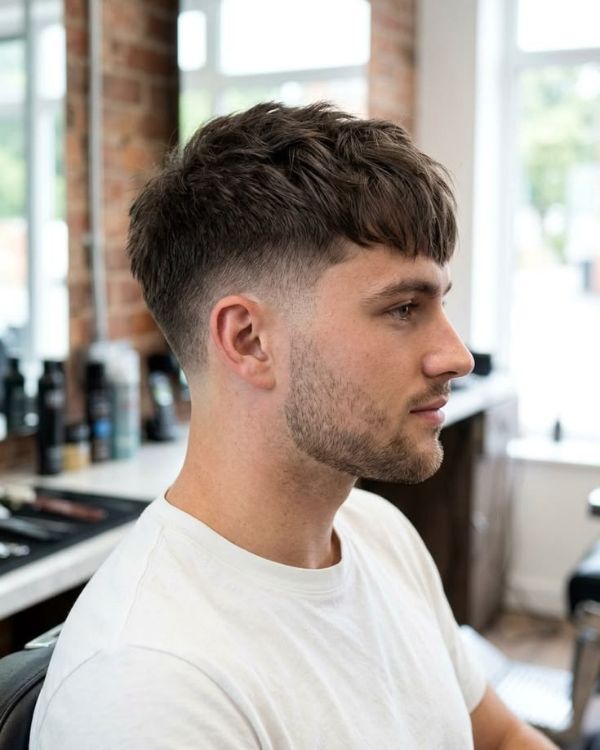
A thick textured crop fade combines short faded sides with a fuller, layered top. The fringe is brushed slightly upward instead of falling straight across the forehead, giving the haircut more height and a sharper outline. Keeping around 2–3 inches on top helps thick hair hold its shape without looking too bulky.
Ask your barber to use point cutting to break up the heavy sections and create separation between the strands. A low or mid fade works well because it keeps the sides clean without taking too much attention away from the textured top. The front should have enough length to lift naturally rather than standing straight up.
For styling, apply a small amount of matte clay or texture powder to dry hair. Use your fingers to lift the fringe while directing it slightly backward. If your hair is very thick, blow-dry the front upward first to control its direction and create a more defined finish.
High and Tight Fade
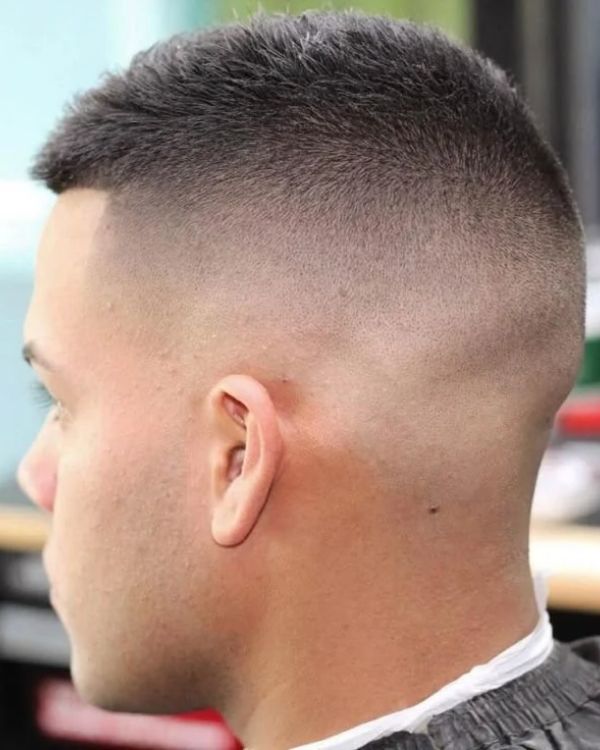
A high and tight fade keeps the sides and back very short, with a small amount of extra length on top. The fade starts high near the temples and blends quickly into the shorter hair below. This creates a close, military-inspired shape that looks clean without needing complicated styling.
Ask your barber to leave around ½–1 inch on top and keep the sides noticeably shorter. A skin fade gives a stronger contrast, while a short clipper fade creates a softer finish. This haircut works particularly well for men with thick, straight, or slightly wavy hair.
One advantage of this cut is its simple daily care. You can leave the top natural or use a little matte paste to add texture. Visit your barber every 2–3 weeks to maintain the high fade and prevent the sides from losing their sharp shape.
French Crop
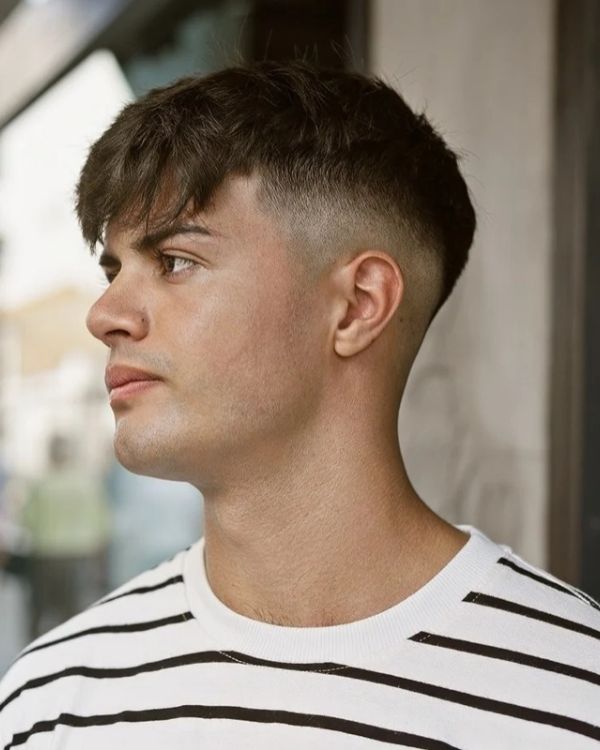
A French crop features a short top with a forward fringe and neatly trimmed sides. The hair usually has a textured finish, which gives it more depth than a basic short haircut. Its main feature is the front section, which falls slightly over the forehead instead of being brushed backward.
Ask your barber to leave around 1–2 inches on top and create a short, textured fringe. Point cutting helps break up thick sections and prevents the front from looking like a solid, heavy line. You can pair it with a low taper, mid fade, or skin fade depending on how much contrast you prefer.
For daily styling, rub a small amount of matte clay between your palms and work it through dry hair. Push the top forward with your fingers and separate a few strands to bring out the texture. The French crop is especially practical for men who want a defined haircut without spending much time styling it.
Comb Over
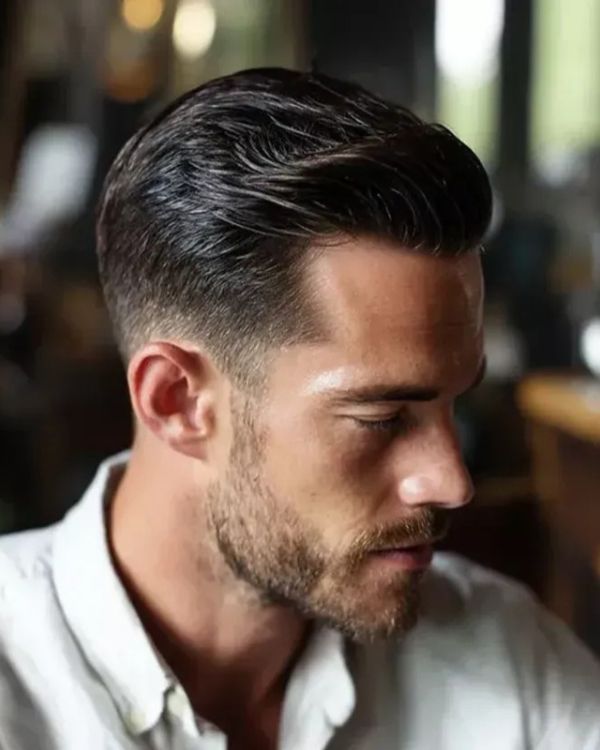
A comb over keeps the top longer and directs the hair from one side to the other. Unlike a sharply defined side part, this style can have a softer finish with natural volume and movement. Shorter sides help the longer top stand out without making the haircut look too heavy.
Ask your barber to leave around 2–3 inches on top and gradually shorten the sides with a taper or fade. If your hair is thick, light scissor layering can remove extra bulk and make it easier to sweep across. A natural part usually gives a more relaxed appearance than a hard shaved line.
For styling, apply a small amount of matte cream or lightweight pomade to slightly damp hair. Use a comb to direct the top sideways, then blow-dry for extra volume if needed. Finish with your fingers to soften the shape and keep it from looking overly stiff.
Slick Back with Undercut Fade
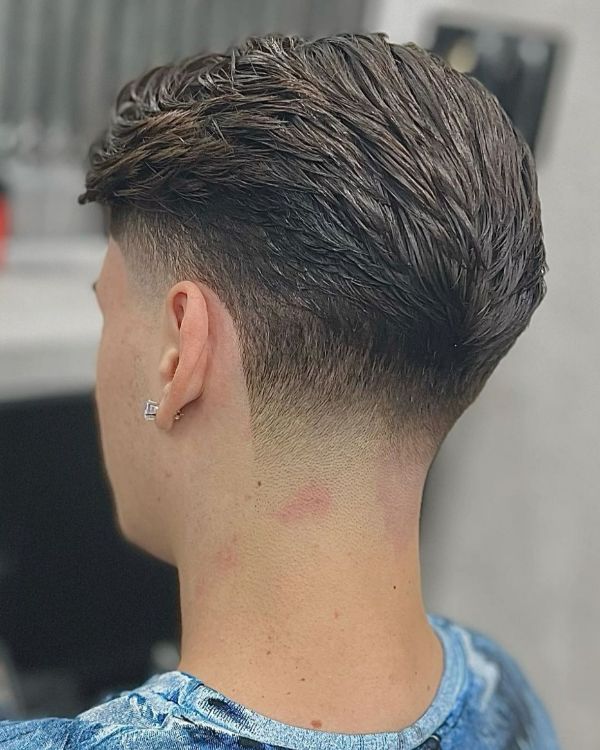
The slick back with undercut fade combines a longer top with very short sides and back. The top is brushed backward, creating a smooth direction that contrasts with the clean fade. Keeping around 3–4 inches on top gives enough length to sweep the hair back without making it difficult to control.
Ask your barber to create a clear undercut fade while leaving the top disconnected or softly blended, depending on your preferred finish. This style works particularly well with straight and slightly wavy hair. If your hair is thick, light layering can reduce weight and help it sit backward more easily.
For styling, apply a small amount of medium-hold pomade or styling cream to slightly damp hair. Use a comb to direct the hair backward, then blow-dry it in the same direction for better control. Avoid applying too much product near the roots, as it can make the hair look greasy and heavy.
Side Swept Hair with Mid Taper Fade
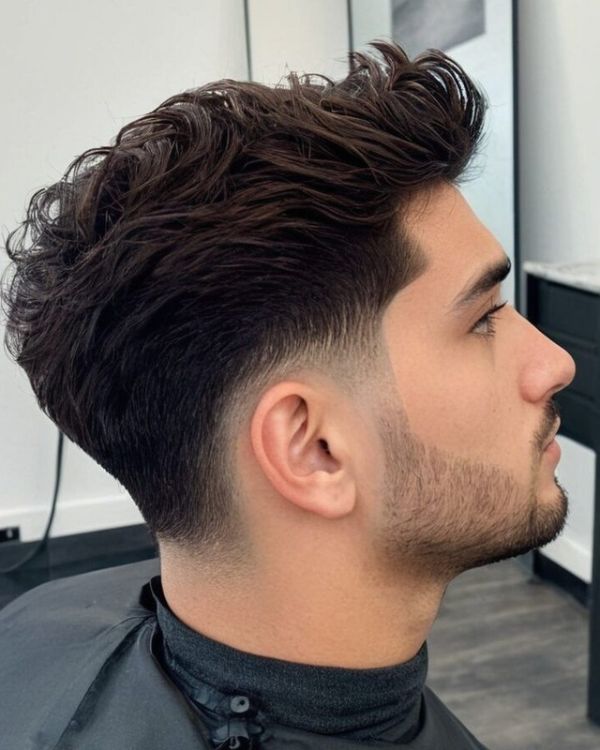
Side-swept hair with a mid taper fade combines a longer top with neatly shortened sides. The top is directed toward one side, creating natural movement instead of a flat, fixed shape. The mid taper starts around the temples and gradually shortens near the ears and neckline, giving the haircut a clean outline.
Ask your barber to leave around 2–3 inches on top so the hair can move comfortably across the forehead. Light scissor layering helps thick hair sit better, while a softer finish works well for fine hair. The mid taper keeps the sides tidy without removing too much hair from the upper sides.
For styling, apply a small amount of matte cream or lightweight styling clay to slightly damp hair. Blow-dry the top toward your preferred side while using your fingers to guide the strands. Finish with a little product to control flyaways without making the hair look stiff.
Modern Pompadour Fade
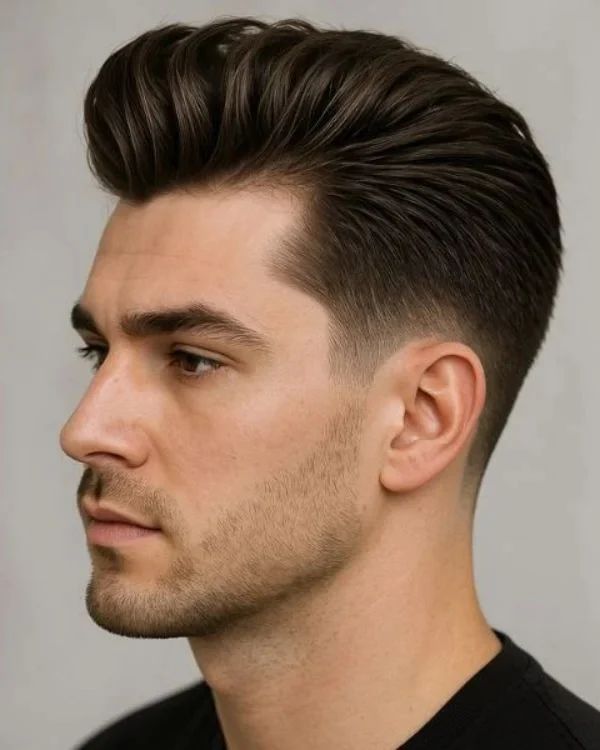
A modern pompadour fade keeps the front hair longer and lifts it upward before sweeping it slightly backward. The sides gradually fade down, creating a strong contrast with the fuller top. Unlike the traditional pompadour, this version often has less height and a softer shape that feels easier to wear every day.
Ask your barber to leave around 3–4 inches at the front and slightly less toward the crown. A low or mid fade works well if you want the top to remain the main feature. Light layering can also remove extra weight, especially if you have thick hair that tends to fall forward.
For styling, apply volumizing mousse to damp hair and blow-dry the front upward using a brush. Finish with a small amount of medium-hold matte clay to keep the shape in place. Avoid heavy wax because it can weigh down the front and reduce the volume that makes this haircut stand out.
Short Shaggy Curls
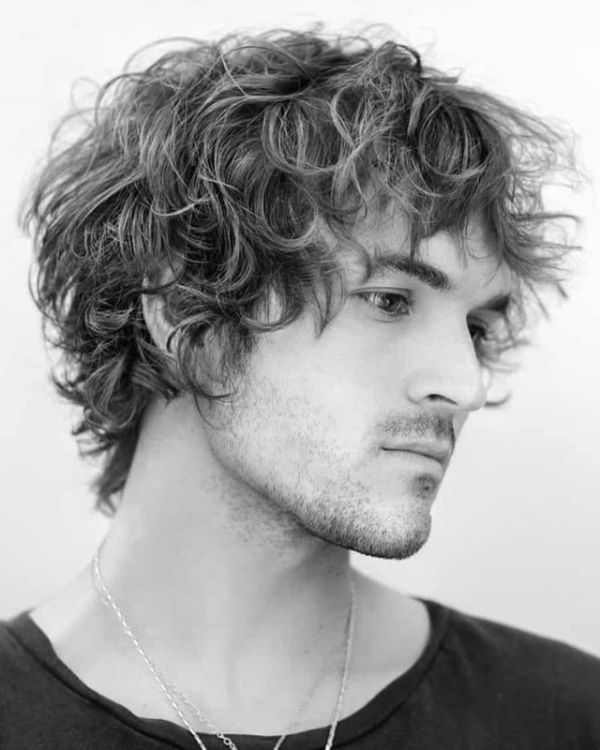
Short shaggy curls combine natural curl patterns with uneven layers that create a relaxed, slightly messy shape. The top is kept longer than the sides, allowing individual curls to form their own direction. Soft layers around the crown also help thick curls sit with more movement instead of forming one heavy block.
Ask your barber to cut the curls according to their natural shape, preferably when they are dry or nearly dry. This makes it easier to see how much each curl shrinks after cutting. Keep enough length around the crown and fringe to show the shaggy finish, while trimming the neckline and sideburns for a cleaner outline.
For daily styling, apply a small amount of curl cream or lightweight leave-in conditioner to damp hair. Scrunch the curls gently and let them dry without repeatedly touching them. Avoid heavy gels and excessive brushing because both can break up the curl pattern and create unwanted frizz.
Short Layered Flow
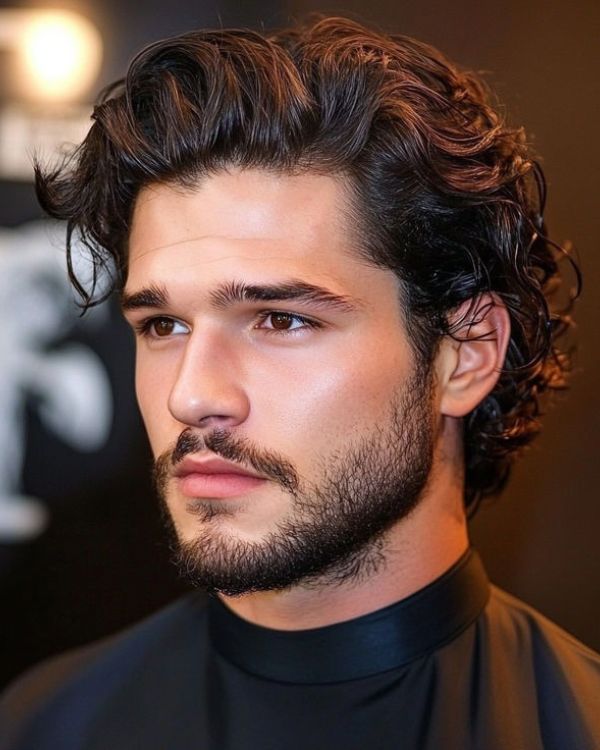
A short layered flow keeps the hair long enough to move naturally without creating the weight of a full-length flow haircut. The top and sides have soft layers that help the hair fall backward and slightly outward. This creates a relaxed shape with more movement around the crown and temples.
Ask your barber to leave around 3–4 inches on top and add blended layers through the sides and back. Avoid a heavy fade because it can remove the connected shape that makes this haircut work. This style is especially suitable for straight and wavy hair with enough length to sweep away from the face.
For styling, apply a small amount of lightweight styling cream to damp hair and brush it backward with your fingers. Use a blow dryer on low heat to guide the front away from your forehead. Finish with a little texture spray if your hair needs extra movement without becoming stiff.
Short Slick Back with High Skin Fade
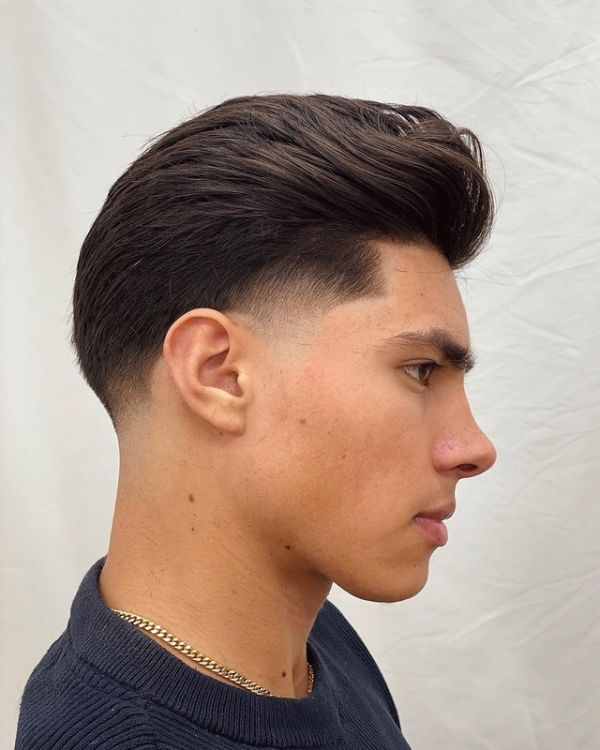
A short slick back with a high skin fade combines a neatly brushed top with sides that gradually disappear into the skin. The top is kept around 2–3 inches long, giving enough length to sweep the hair backward without creating a bulky shape. The high fade starts near the temples, making the contrast between the top and sides more noticeable.
Ask your barber to keep the top slightly textured rather than cutting it into one flat layer. A clean high skin fade works particularly well with straight and slightly wavy hair. If you have a strong cowlick near the crown, ask your barber to follow its natural direction so the hair does not stick up after styling.
For styling, apply a small amount of medium-hold pomade or matte cream to damp hair. Comb the top backward and use a blow dryer to keep the direction in place. The high fade needs regular touch-ups every 1–2 weeks to maintain its clean, sharp appearance.
Short Fringe with Tapered Sides
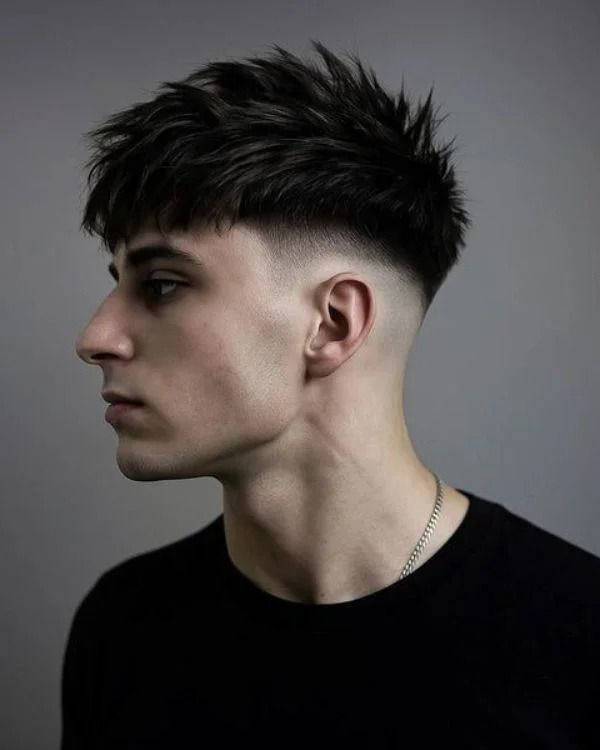
A short fringe with tapered sides keeps the front hair slightly longer so it falls naturally across the forehead. The sides gradually become shorter around the temples and neckline, creating a clean shape without the strong contrast of a skin fade. A lightly textured top makes the fringe look softer and less like a straight, heavy line.
Ask your barber to leave around 1–2 inches at the front and blend the sides with a low or mid taper. If you have thick hair, point cutting can remove extra weight and help the fringe sit naturally. Straight and slightly wavy hair usually makes this style easy to shape.
For styling, apply a small amount of matte styling cream to damp hair and guide the fringe forward with your fingers. Let it air-dry for a natural finish or use a blow dryer on low heat for better control. Avoid heavy wax because it can make the front look greasy and separate into thick clumps.
Short, Textured Mod Cut
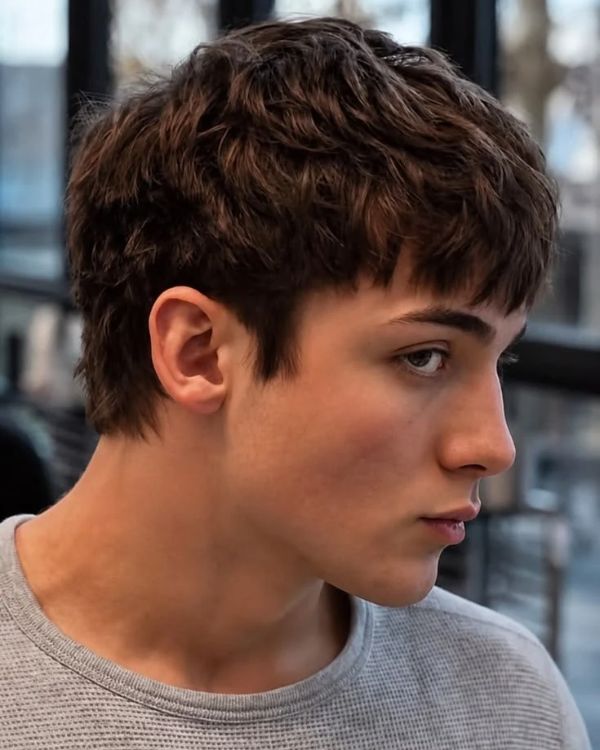
A short, textured mod cut has a rounded shape with soft layers and a slightly forward fringe. Unlike a traditional mod cut with longer sides, this version keeps the hair closer to the head while maintaining enough length to show natural movement. The textured top gives it a relaxed finish without looking messy.
Ask your barber to leave around 2–3 inches on top and create blended layers around the sides and back. Keep the fringe slightly uneven so it does not form a heavy straight line across the forehead. This cut works particularly well with straight and slightly wavy hair because both textures help maintain its rounded shape.
For styling, use a small amount of matte cream or lightweight styling paste on slightly damp hair. Move the hair forward with your fingers and gently shape the fringe. Avoid using too much product because the mod cut looks best when the layers remain soft and easy to move.
What Are The Best Short Haircuts For Men?
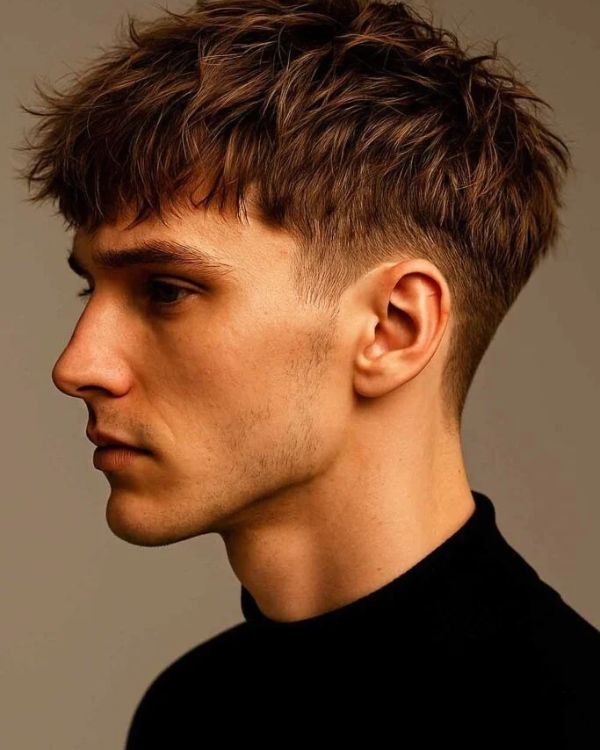
The best short haircuts for men depend on hair thickness, natural texture, face shape, and how much time you want to spend styling. A French crop works well for men who prefer a forward fringe, while a crew cut offers a cleaner shape with very little daily maintenance. For a sharper appearance, a low taper or mid fade can add definition without removing too much length.
Hair texture also makes a difference when choosing a short haircut. Thick hair often looks better with point-cut layers that remove excess bulk, while fine hair can benefit from shorter sides and a slightly textured top. Men with natural curls can choose a short curly cut that keeps the curl pattern visible without creating unnecessary volume around the sides.
Before visiting your barber, think about how your hair naturally falls and how often you can manage trims. Bring a reference photo and discuss the top length, fade height, and fringe shape rather than asking for a haircut by name alone. These small details help your barber create a short style that suits your hair instead of simply copying a picture.
Low-Maintenance Short Men’s Hairstyles
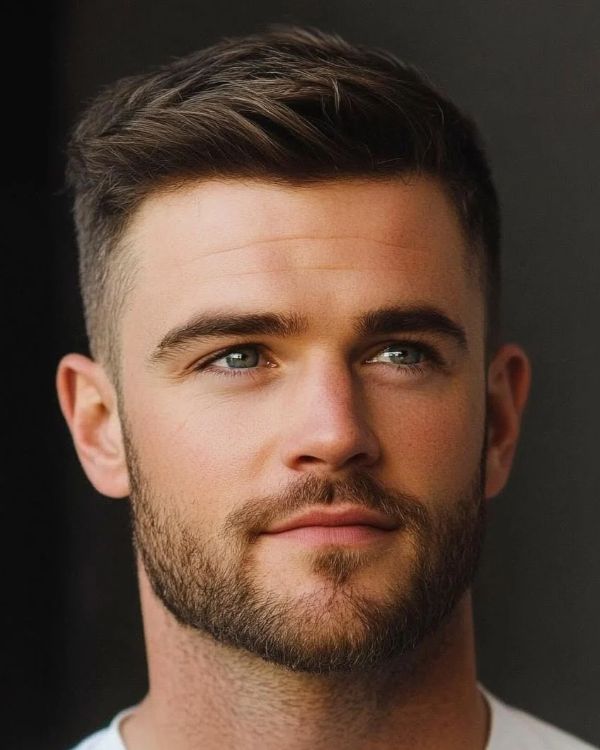
Low-maintenance short hairstyles are ideal for men who want their hair to look neat without spending much time in front of a mirror. A classic buzz cut, short crew cut, and simple Caesar cut are practical choices because they need little daily styling. Their shorter length also makes washing and drying quicker, especially for men with busy routines.
The key to an easy haircut is choosing a style that works with your natural hair texture. Straight hair can stay manageable with a short side part, while naturally curly hair often needs only a little leave-in conditioner to control dryness. Men with thick hair should ask for light texturing to remove excess bulk, as this makes the hair easier to manage after washing.
Even simple haircuts need occasional attention to keep their shape. A buzz cut may need trimming every two or three weeks, while a short textured crop can usually go a little longer between appointments. Keep a lightweight styling cream or matte paste at home if you want to add definition without following a complicated styling routine.
No Responses